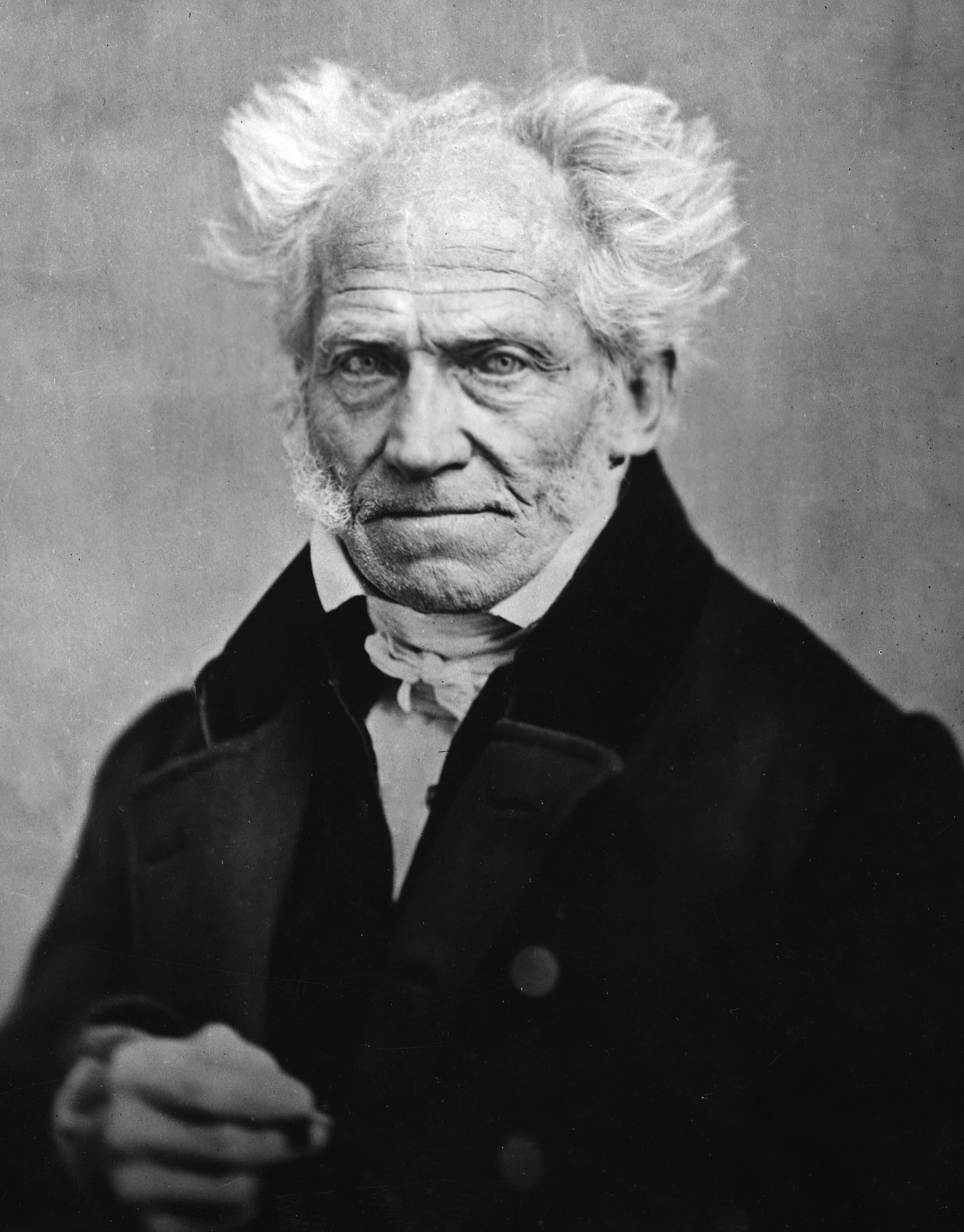
Arthur Schopenhauer
Philosopher of the blind Will — pessimism, and release through art and compassion.
Overview
A brilliant pessimist who stood against Hegel, Schopenhauer held that the reality behind Kant's appearances is a single blind, striving 'Will'. Because willing is endless craving, life is essentially suffering; but we find temporary release in disinterested aesthetic contemplation and lasting release in compassion and the ascetic denial of the will. Among the first Western philosophers to draw seriously on Indian thought, he deeply influenced Nietzsche, Wagner, and Freud.
What they supported — and why
The world as Will and Representation
SupportedThe world we know is representation (appearance); its inner reality is a single, blind, purposeless Will that objectifies itself in all things.
WhyWe know our own body both from outside (as object) and inside (as will), and this inner willing is the key to the nature of everything.
Pessimism — life as suffering
SupportedBecause the Will is endless striving, satisfaction is fleeting and life oscillates between want and boredom; existence is essentially suffering.
WhyDesire by nature is lack; fulfilling one want breeds another, so willing can never bring lasting contentment.
Release through art, compassion, and asceticism
SupportedDisinterested aesthetic contemplation frees us briefly from willing; compassion and the ascetic denial of the will free us more deeply.
WhySince suffering comes from willing, quieting the will — in beauty, in fellow-feeling with others' suffering, in renunciation — is the path to peace.
Causes championed
- Honesty about suffering
- Compassion as the basis of ethics
- Release from the tyranny of the will
Issues wrestled with
- What is the reality behind appearances?
- Why is life full of suffering?
- How can we find peace?
Hurdles faced
- Long ignored in favor of Hegel before his late fame
- A famously misanthropic temperament
Works & books
1 catalogued. Status shows how much survives to today.
The World as Will and Representation
SurvivesHis central work on the Will, suffering, art, and salvation.
Read the texts free
12 of Arthur Schopenhauer’s works are free to read in full — public-domain English editions on Project Gutenberg, matched from Gutenberg’s own catalogue.
Every edition online — Open Library catalogues 615 works & editions, 85 of them free to read in full.
The influence network
See Arthur Schopenhauer in the map →Influenced
In their words
“Life swings like a pendulum backward and forward between pain and boredom.”
— The World as Will and Representation
Legacy
He brought suffering, the unconscious will, and Indian thought into Western philosophy, shaping Nietzsche, depth psychology, and the arts.
Follow their questions
This thinker is a stop on these paths through philosophy.
Further reading
Cross-checked against these authoritative references.