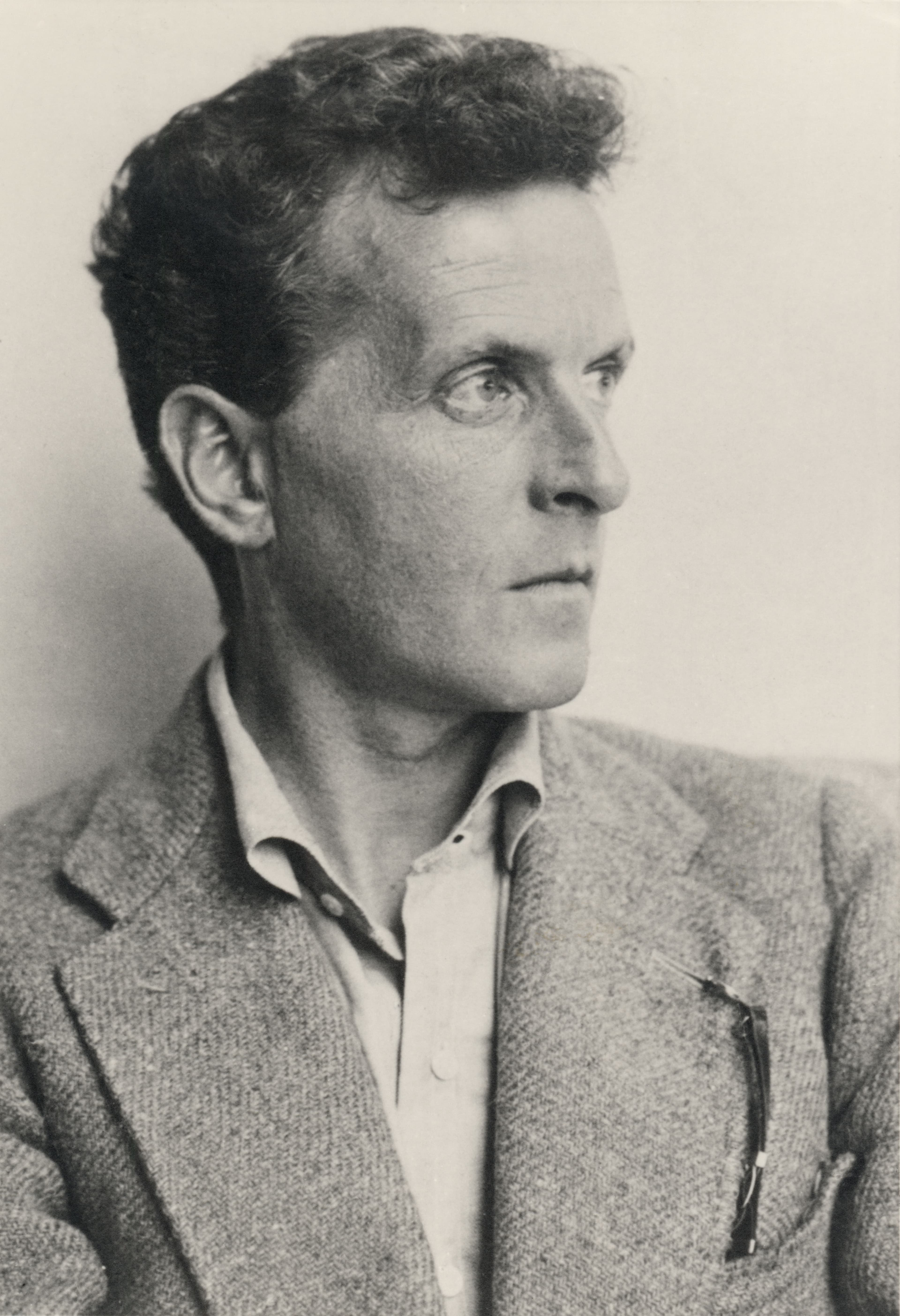
Ludwig Wittgenstein
Philosopher of language, twice over — the limits of language, and meaning as use.
Overview
One of the 20th century's most influential and enigmatic philosophers, Wittgenstein produced two revolutionary philosophies of language. The early Tractatus argued that language pictures facts and that the limits of language are the limits of the world — so of the deepest things 'one must be silent'. His later Philosophical Investigations overturned this, holding that meaning is not picturing but use within rule-governed 'language games' and 'forms of life'. Both works reshaped philosophy, and he held that philosophy's task is to dissolve confusions, not build theories.
What they supported — and why
The picture theory and the limits of language (early)
SupportedMeaningful language pictures possible facts; what cannot be said (ethics, the meaning of life, the mystical) must be shown or passed over in silence.
WhyIf sense requires picturing facts, then attempts to say the unsayable are literally nonsense — 'whereof one cannot speak, thereof one must be silent'.
Meaning as use, and language games (later)
SupportedThe meaning of a word is its use in the practices of a language; language is a family of rule-governed 'games' embedded in 'forms of life'.
WhyWords don't mean by naming inner objects or picturing facts but by their role in shared activities, so philosophy must look at how language actually works.
Philosophy as therapy
SupportedPhilosophical problems arise from misunderstandings of our language; the task is to dissolve them, showing 'the fly the way out of the fly-bottle'.
WhyMany deep puzzles are confusions bred by misusing words, so clarity — not new theories — is the cure.
Causes championed
- Clarity about the workings of language
- Dissolving philosophical confusion
- Honesty about the limits of what can be said
Issues wrestled with
- How does language mean?
- What can and cannot be said?
- What is the task of philosophy?
Hurdles faced
- Renounced a vast inherited fortune; a tormented, restless life
- So thoroughly overturned his own early masterpiece that he refuted himself
Works & books
2 catalogued. Status shows how much survives to today.
Tractatus Logico-Philosophicus
SurvivesHis early work on language, logic, and the limits of the sayable.
Philosophical Investigations
SurvivesHis later philosophy of language games and meaning as use (published posthumously).
Read the texts free
1 of Ludwig Wittgenstein’s works are free to read in full — public-domain English editions on Project Gutenberg, matched from Gutenberg’s own catalogue.
Every edition online — Open Library catalogues 322 works & editions, 2 of them free to read in full.
The influence network
See Ludwig Wittgenstein in the map →Influenced by
Influenced
In their words
“Whereof one cannot speak, thereof one must be silent.”
— Tractatus Logico-Philosophicus
Legacy
He twice transformed the philosophy of language; few thinkers have so shaped how philosophy understands meaning, mind, and its own task.
Follow their questions
This thinker is a stop on these paths through philosophy.
Further reading
Cross-checked against these authoritative references.