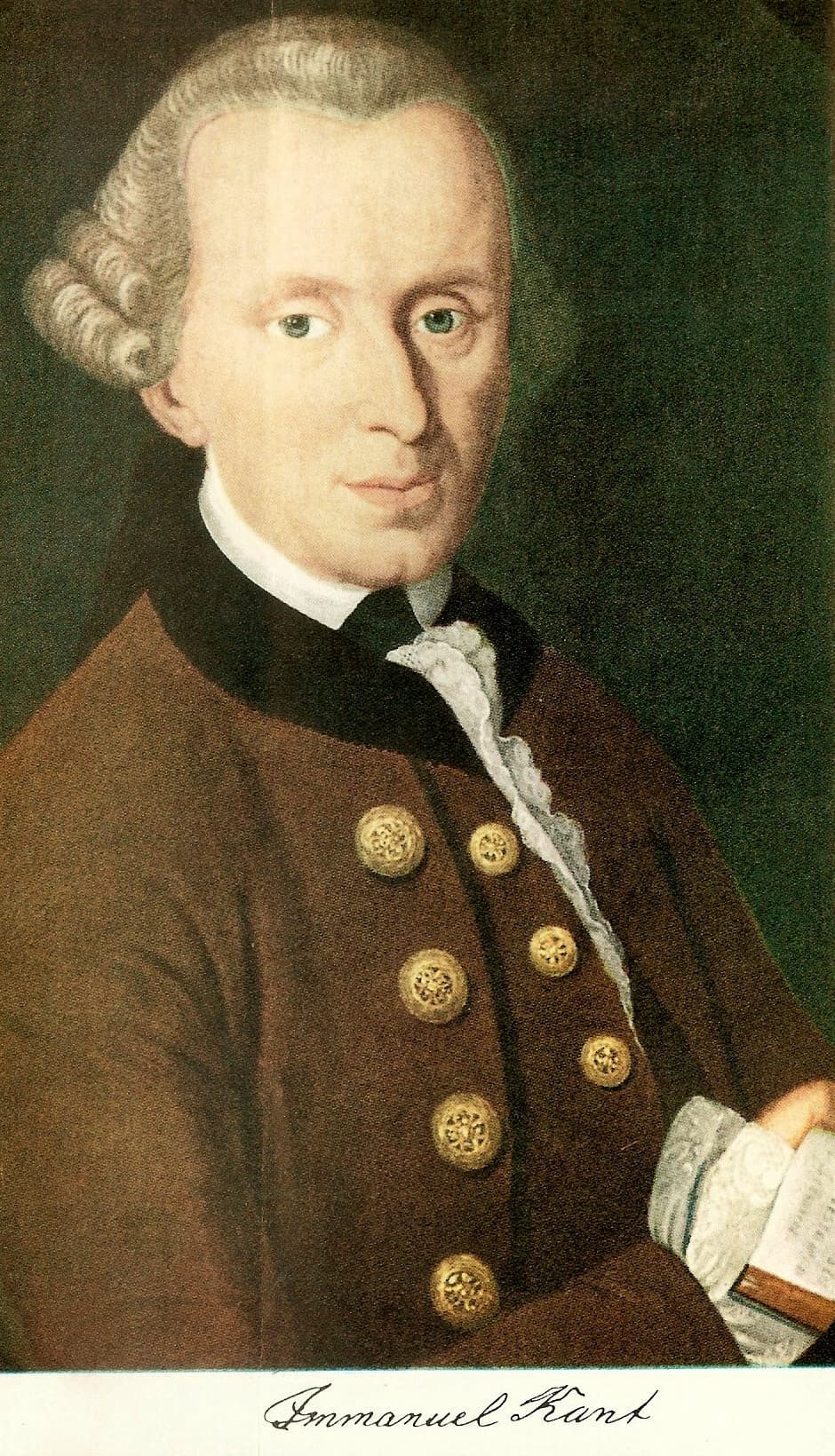
Immanuel Kant
The Copernican revolution in philosophy — the mind shapes experience; act on universal law.
Overview
One of the most influential philosophers in history, Kant forged a 'critical' philosophy that synthesized rationalism and empiricism and reset the terms of the field. In the Critique of Pure Reason he argued for a 'Copernican revolution': rather than the mind conforming to objects, objects conform to the mind's own structures (space, time, and the categories), so we can have certain knowledge of the world as it appears (phenomena) but not of things in themselves (noumena). In ethics he grounded morality in reason alone through the categorical imperative and human autonomy and dignity.
What they supported — and why
The Copernican revolution in knowledge
SupportedThe mind actively structures experience: space, time, and the categories are forms we impose, so we know the world as it appears (phenomena), never things in themselves (noumena).
WhyThis explains how we can have necessary, universal knowledge (synthetic a priori) — because the order we find is partly contributed by the knowing mind itself.
The categorical imperative
SupportedAct only on that maxim you could will to become a universal law, and always treat humanity, in yourself and others, as an end and never merely as a means.
WhyMorality must hold for all rational beings unconditionally, so a moral rule must be universalizable and must respect the rational dignity of persons.
Autonomy and the limits of reason
SupportedMorality rests on the autonomy of the rational will giving itself the law; and reason, when it strays beyond possible experience, falls into contradictions (antinomies).
WhyFreedom and moral worth require self-legislation, not external command; and knowing reason's proper limits curbs dogmatic metaphysics while leaving room for faith.
Causes championed
- The reconciliation of freedom and natural law
- Human autonomy and dignity
- Enlightenment — 'dare to know'
Issues wrestled with
- How is certain knowledge of the world possible?
- What is the supreme principle of morality?
- What may we know, do, and hope?
Hurdles faced
- Overturning both dogmatic rationalism and Humean skepticism
- Later censorship of his writings on religion by the Prussian state
Works & books
3 catalogued. Status shows how much survives to today.
Critique of Pure Reason
SurvivesHis epistemology and metaphysics — the Copernican turn and the limits of knowledge.
Groundwork of the Metaphysics of Morals
SurvivesHis ethics of the categorical imperative and autonomy.
Critique of Practical Reason; Critique of Judgment
SurvivesHis mature moral philosophy and his aesthetics and teleology.
Read the texts free
10 of Immanuel Kant’s works are free to read in full — public-domain English editions on Project Gutenberg, matched from Gutenberg’s own catalogue.
Every edition online — Open Library catalogues 2,068 works & editions, 180 of them free to read in full.
The influence network
See Immanuel Kant in the map →In their words
“Act only according to that maxim whereby you can, at the same time, will that it should become a universal law.”
— Groundwork of the Metaphysics of Morals
Legacy
The pivot of modern philosophy: nearly every later movement defines itself in relation to Kant's critical turn, his ethics of autonomy, and his account of human dignity.
Follow their questions
This thinker is a stop on these paths through philosophy.
Further reading
Cross-checked against these authoritative references.