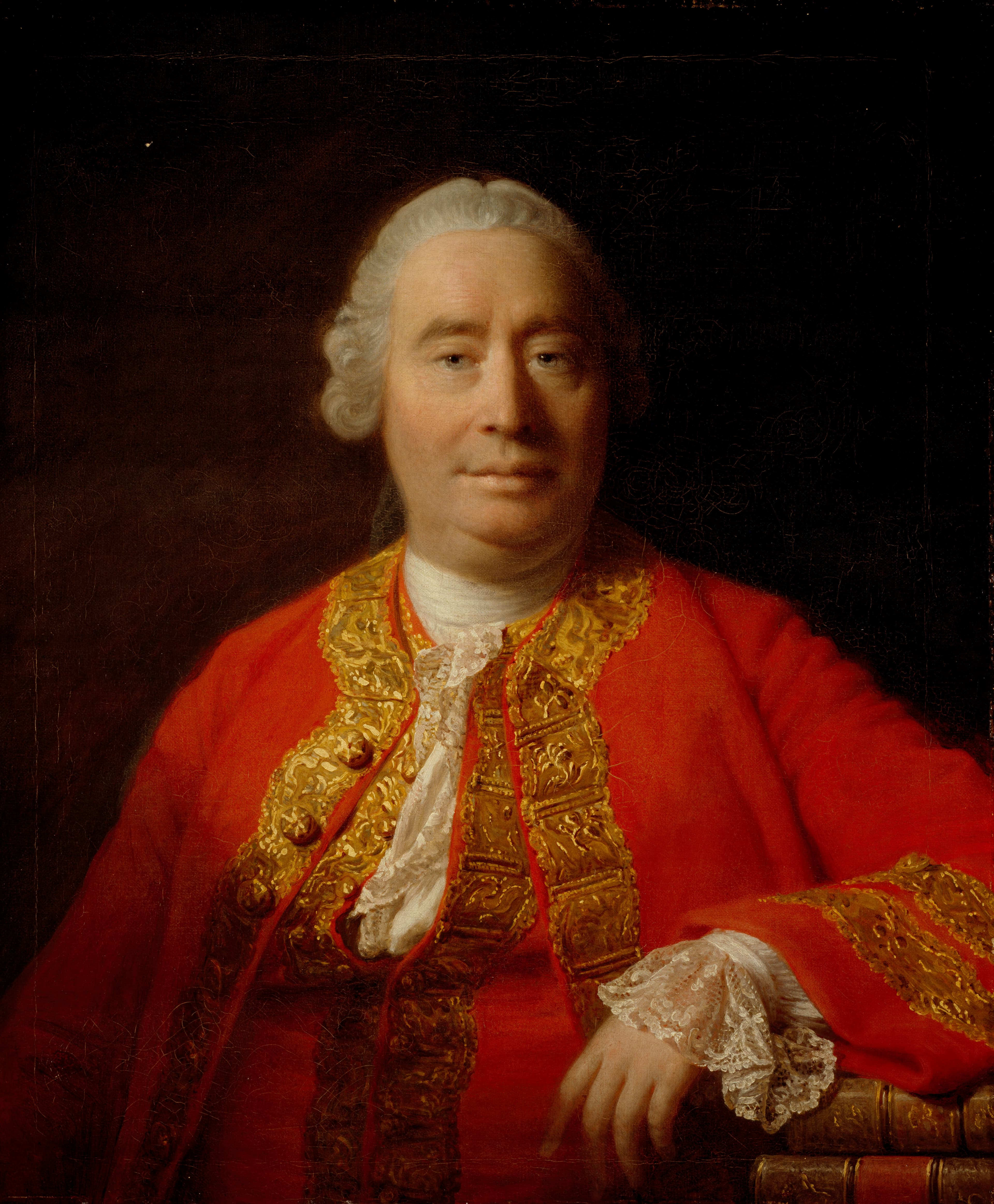
David Hume
The great skeptic — cause, self, and reason dissolved by experience and habit.
Overview
The Scottish Enlightenment's greatest philosopher, Hume carried empiricism to its rigorous, skeptical conclusion. All ideas, he held, derive from prior impressions; tracing them exposes how little reason can prove. We never observe causal power, only the constant conjunction of events, so belief in cause and effect rests on custom, not reason. The self is but a 'bundle' of perceptions; morality springs from sentiment, not reason; and no 'ought' can be derived from an 'is'. Calm, genial, and devastating, he reshaped every field he touched.
What they supported — and why
The problem of induction and causation
SupportedWe never perceive necessary connection between causes and effects — only their constant conjunction — so belief in causation rests on habit, not reason.
WhyNo amount of past regularity logically guarantees the future, yet we cannot help expecting it; the expectation is custom, not rational proof.
The bundle theory of the self
SupportedLooking within, we find only a bundle of changing perceptions, never a simple, enduring self.
WhySince every idea comes from an impression and no impression of a constant 'self' is found, the self is a fiction we construct from linked perceptions.
Sentiment, not reason, grounds morality; the is–ought gap
SupportedMoral distinctions come from feeling, not reason, and one cannot validly derive an 'ought' from an 'is'.
WhyReason is 'the slave of the passions' — it discovers facts but only sentiment moves us to approve or act, and pure facts contain no values.
Causes championed
- Rigorous empiricism
- Skepticism about metaphysics and religion
- A naturalistic science of human nature
Issues wrestled with
- Can we justify belief in cause and effect?
- Is there an enduring self?
- Does morality come from reason or feeling?
Hurdles faced
- Denied university chairs for his suspected irreligion
- His masterwork 'fell dead-born from the press' before later recognition
Works & books
3 catalogued. Status shows how much survives to today.
A Treatise of Human Nature
SurvivesHis ambitious early system of the mind, knowledge, passions, and morals.
An Enquiry Concerning Human Understanding
SurvivesHis accessible restatement — induction, causation, and the critique of miracles.
Dialogues Concerning Natural Religion
SurvivesA subtle, devastating critique of arguments for God (published posthumously).
Read the texts free
16 of David Hume’s works are free to read in full — public-domain English editions on Project Gutenberg, matched from Gutenberg’s own catalogue.
Every edition online — Open Library catalogues 1,262 works & editions, 116 of them free to read in full.
The influence network
See David Hume in the map →In their words
“Reason is, and ought only to be, the slave of the passions.”
— A Treatise of Human Nature
Legacy
His skeptical empiricism reset the problems of causation, induction, the self, and ethics that philosophy still wrestles with today.
Follow their questions
This thinker is a stop on these paths through philosophy.
Further reading
Cross-checked against these authoritative references.