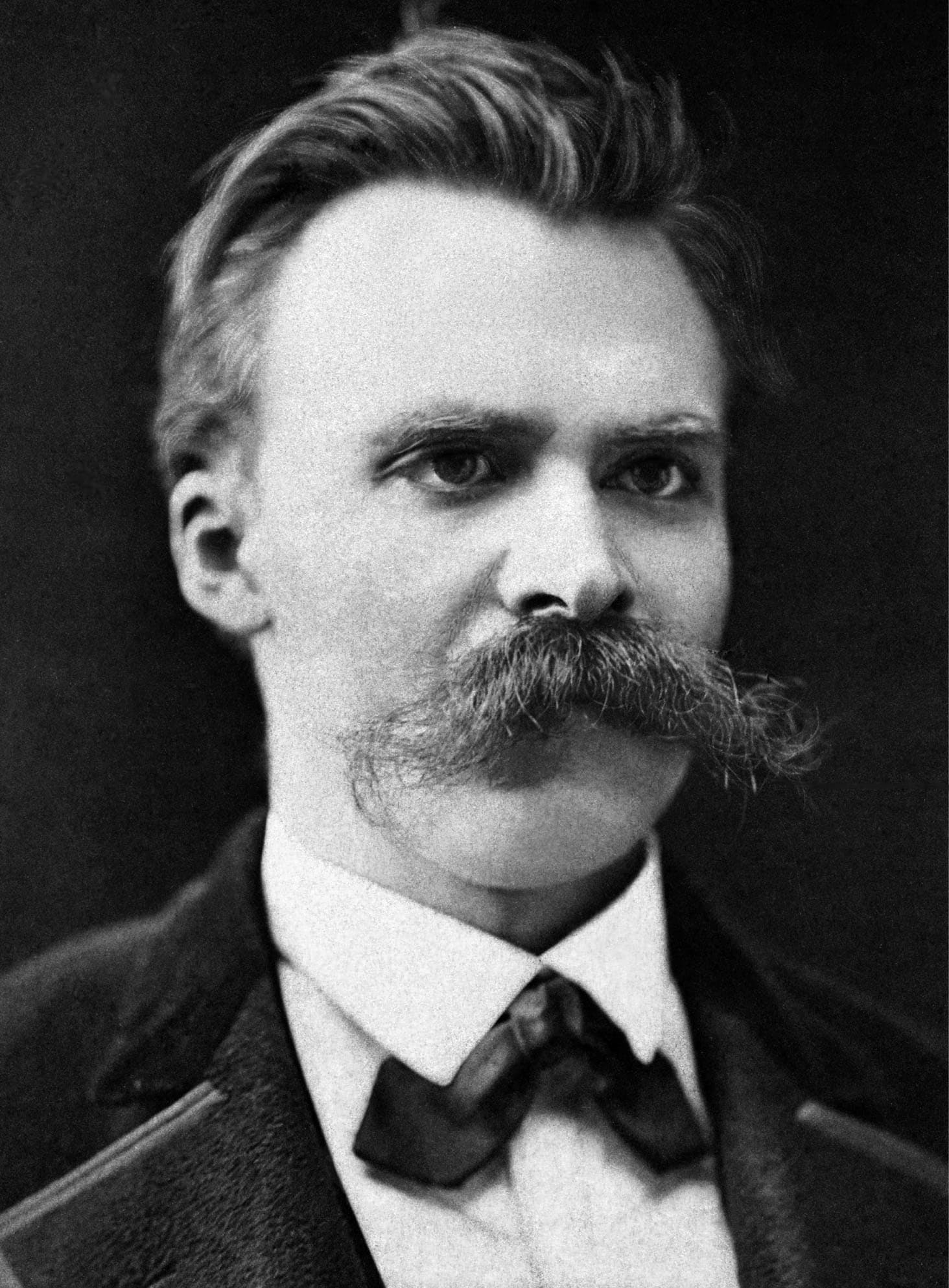
Friedrich Nietzsche
'God is dead' — the will to power, the critique of morality, and self-creation.
Overview
A radical German philosopher and philologist who diagnosed a coming crisis of meaning: with the 'death of God', the traditional foundations of morality and truth lose their authority. Writing in aphorisms and the prophetic Thus Spoke Zarathustra, he traced morality to its psychological and historical roots, contrasted life-affirming 'master' values with resentful 'slave' morality, and called for a revaluation of values and the self-overcoming of the individual. His influence on existentialism, psychology, and postmodern thought is immense — and his work was later distorted by his sister and the Nazis.
What they supported — and why
The death of God and the revaluation of values
SupportedThe collapse of belief in God removes the foundation of traditional morality and meaning; we must confront nihilism and create new, life-affirming values.
WhyOur highest values grew from a faith now lost, so honesty demands facing the void and taking responsibility for creating meaning ourselves.
Master and slave morality
SupportedValues have a history: 'master' morality springs from strength and self-affirmation, 'slave' morality from the resentment (ressentiment) of the weak, which inverted 'good' into meekness.
WhyTracing morality's genealogy shows it is not eternal or God-given but a human, psychological creation serving different forms of life.
The will to power and self-overcoming
SupportedLife is fundamentally will to power — a drive to grow, master, and create; the highest human task is self-overcoming, becoming who one is.
WhyRather than deny life's striving in favor of otherworldly ideals, one should affirm life (even willing its 'eternal recurrence') and shape oneself into something great.
Causes championed
- Life-affirmation over otherworldly ideals
- Honesty about the sources of morality
- Self-creation and the revaluation of values
Issues wrestled with
- What follows the 'death of God'?
- Where does morality really come from?
- How should one live without absolute foundations?
Hurdles faced
- Chronic illness and isolation; a mental collapse in 1889
- His work posthumously falsified by his sister and appropriated by the Nazis
Works & books
2 catalogued. Status shows how much survives to today.
Thus Spoke Zarathustra
SurvivesHis prophetic, poetic work on the Übermensch, eternal recurrence, and self-overcoming.
Beyond Good and Evil; On the Genealogy of Morality
SurvivesHis critique of morality and its psychological and historical genealogy.
Read the texts free
20 of Friedrich Nietzsche’s works are free to read in full — public-domain English editions on Project Gutenberg, matched from Gutenberg’s own catalogue.
Every edition online — Open Library catalogues 2,877 works & editions, 59 of them free to read in full.
The influence network
See Friedrich Nietzsche in the map →Influenced by
Influenced
In their words
“That which does not kill us makes us stronger.”
— Twilight of the Idols
Legacy
A hammer to the Western tradition, his diagnosis of nihilism and genealogy of morality shaped existentialism, psychology, and postmodern thought.
Follow their questions
This thinker is a stop on these paths through philosophy.
Further reading
Cross-checked against these authoritative references.