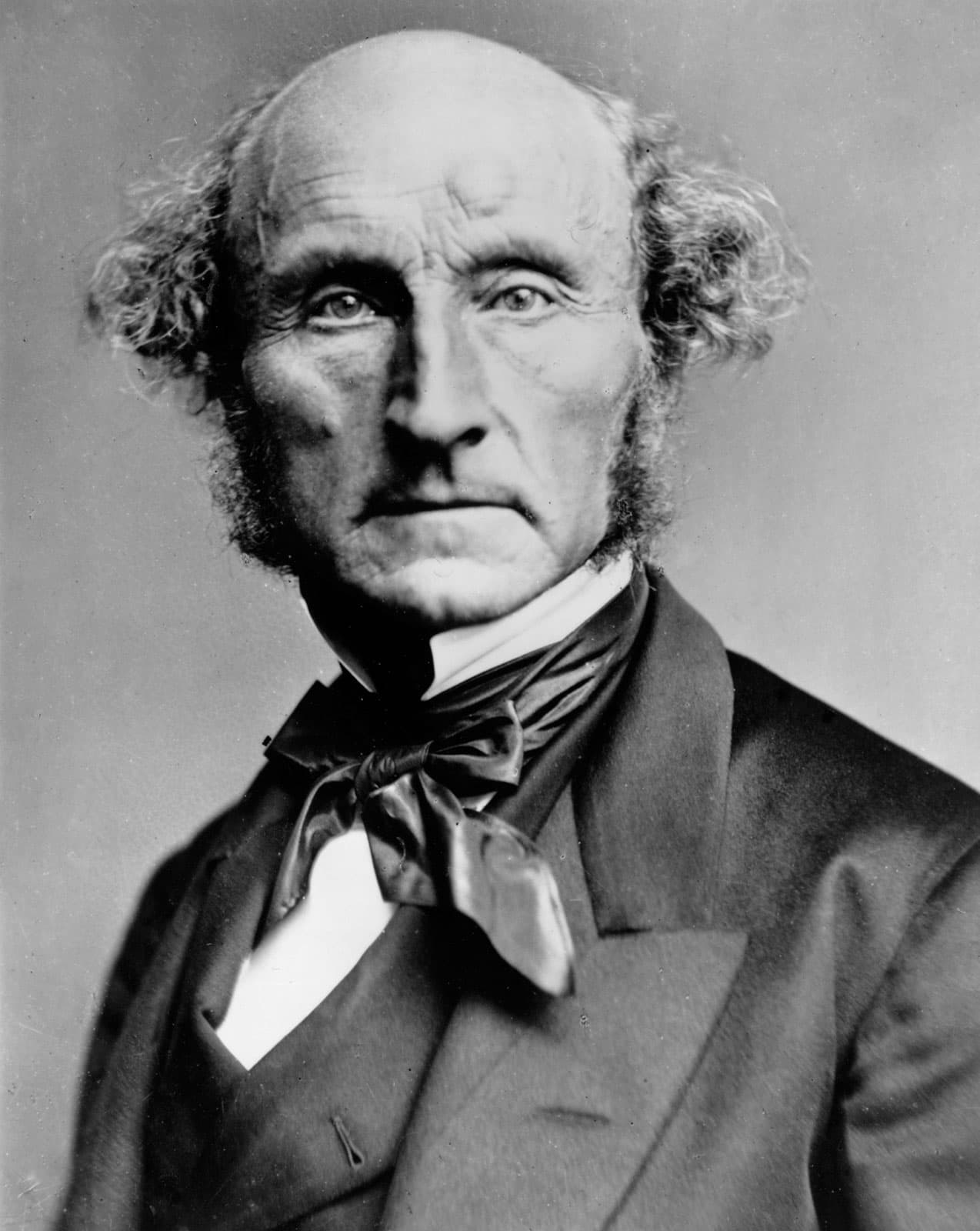
John Stuart Mill
The great liberal utilitarian — the greatest happiness, liberty, and the rights of women.
Overview
The most influential British philosopher of the 19th century, Mill refined utilitarianism and became liberalism's classic voice. He argued that actions are right as they promote happiness, but insisted on the quality of pleasures, not just quantity. In On Liberty he defended freedom of thought and action under the 'harm principle', and he was an early, forceful advocate of women's equality and representative democracy.
What they supported — and why
Utilitarianism, with higher and lower pleasures
SupportedActions are right insofar as they promote happiness (pleasure and the absence of pain), but intellectual and moral pleasures are higher in quality than mere sensation.
Why'It is better to be Socrates dissatisfied than a fool satisfied'; those who have known both prefer the higher pleasures, so quality, not just quantity, counts.
The harm principle
SupportedThe only purpose for which power can rightfully be exercised over anyone against their will is to prevent harm to others.
WhyIndividual liberty of thought and lifestyle is essential to truth and human development, so society may not coerce people merely for their own good or to enforce conformity.
The equality of women and representative democracy
SupportedWomen are entitled to the same rights, education, and opportunities as men; good government requires broad, representative participation.
WhyThe subjection of women rests on custom and power, not justice or nature, and liberty and progress require extending rights and voice to all.
Causes championed
- The greatest happiness
- Individual liberty
- Women's equality
- Representative democracy
Issues wrestled with
- What makes actions right?
- What are the limits of society's power over the individual?
- Who should have rights and a political voice?
Hurdles faced
- A famously severe, forced childhood education and a mental crisis in youth
- Advocating unpopular causes (women's suffrage) in Parliament
Works & books
2 catalogued. Status shows how much survives to today.
On Liberty
SurvivesThe classic defense of individual freedom and the harm principle.
Utilitarianism; The Subjection of Women
SurvivesHis refined utilitarian ethics and his argument for women's equality.
Read the texts free
12 of John Stuart Mill’s works are free to read in full — public-domain English editions on Project Gutenberg, matched from Gutenberg’s own catalogue.
Every edition online — Open Library catalogues 881 works & editions, 61 of them free to read in full.
The influence network
See John Stuart Mill in the map →In their words
“It is better to be a human being dissatisfied than a pig satisfied.”
— Utilitarianism
Legacy
He gave liberalism and utilitarianism their classic modern form; the harm principle and his case for women's equality remain foundational.
Follow their questions
This thinker is a stop on these paths through philosophy.
Further reading
Cross-checked against these authoritative references.