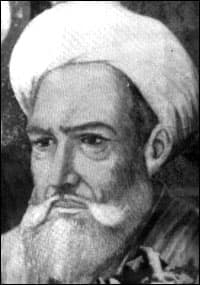
Al-Fārābī
Abū Naṣr al-Fārābī
The 'Second Teacher' after Aristotle and founder of Islamic political philosophy.
Overview
Called the 'Second Teacher' for his mastery of Aristotle, al-Fārābī built the first great systematic philosophy in Islam. He synthesized Aristotelian logic with Neoplatonic emanation, founded political philosophy in Islam with his vision of the 'Virtuous City' led by a philosopher-prophet, and gave sophisticated accounts of prophecy, the intellect, and logic. Avicenna learned metaphysics from him.
What they supported — and why
Emanation from the First
SupportedAll reality flows from the First (God) through a hierarchy of intellects down to the world.
WhyA Neoplatonic emanative order explains how the many proceed from the perfectly one First Cause.
The Virtuous City
SupportedThe best society is ordered toward true happiness under a ruler who is both philosopher and prophet.
WhyOnly the philosopher-prophet knows true happiness and can convey it to all, ordering the city as the heart orders a healthy body.
Prophecy and the imagination
SupportedThe prophet, through a perfected imagination, represents in images the truths the philosopher grasps abstractly.
WhyReligion is philosophy's truth expressed in symbols the many can grasp, uniting the wise and the multitude.
Causes championed
- Systematic philosophy in Islam
- Political philosophy and the good society
- The harmony of religion and reason
Issues wrestled with
- How do the many proceed from God?
- What is the best political order?
- What is prophecy?
Hurdles faced
- Writing amid the political turmoil of the Abbasid world
- Living simply and largely apart from patronage
Works & books
2 catalogued. Status shows how much survives to today.
The Virtuous City
SurvivesHis political philosophy of the ideal society under a philosopher-prophet.
The Attainment of Happiness; On the Intellect; Enumeration of the Sciences
SurvivesFoundational works on ethics, mind, logic, and the classification of knowledge.
Read the texts free
Their works online — Open Library catalogues 170 works & editions, 5 of them free to read in full.
The influence network
See Al-Fārābī in the map →In their words
“The virtuous city resembles the healthy body, all of whose organs cooperate to preserve the life of the whole.”
— The Virtuous City
Legacy
The true founder of the falsafa system and of political philosophy in Islam, whose fusion of Plato, Aristotle, and prophecy shaped everyone after him.
Further reading
Cross-checked against these authoritative references.