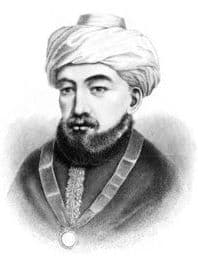
Maimonides
Moses ben Maimon (Rambam)
The greatest Jewish philosopher; reconciled the Torah with Aristotle.
Overview
Physician, jurist, and philosopher, Maimonides (the Rambam) is the towering figure of Jewish thought. Fleeing persecution from Spain to Egypt, he codified all of Jewish law (the Mishneh Torah) and, in The Guide for the Perplexed, reconciled the Torah with Aristotelian philosophy for those torn between them. He taught a rigorous negative theology, interpreted scripture's anthropomorphisms allegorically, and profoundly influenced Aquinas and later Jewish philosophy.
What they supported — and why
Negative theology
SupportedWe cannot describe God's essence positively; we can say only what God is not.
WhyGod's absolute unity and transcendence mean any positive attribute would introduce multiplicity or likeness to creatures, so only negation preserves God's uniqueness.
Harmony of Torah and reason
SupportedRightly understood, scripture and Aristotelian philosophy agree; apparent conflicts are resolved by allegory.
WhyTruth is one, so where the literal text seems to clash with demonstrated reason, its deeper allegorical meaning is intended.
Prophecy and providence through the intellect
SupportedProphecy is a natural perfection of intellect and imagination granted by God, and providence attaches to individuals in proportion to their intellectual perfection.
WhyThe more one perfects reason and cleaves to God, the more one shares in prophecy and divine care.
Causes championed
- Reconciling faith and philosophy
- The unity and transcendence of God
- The codification of Jewish law
Issues wrestled with
- Can God be described?
- Do Torah and reason agree?
- What are prophecy and providence?
Hurdles faced
- Exile and persecution under the Almohads
- Serving as court physician while writing
- His rationalism later sparked bitter controversy among Jews
Works & books
3 catalogued. Status shows how much survives to today.
The Guide for the Perplexed
SurvivesHis reconciliation of the Torah with Aristotelian philosophy.
Mishneh Torah
SurvivesA complete, systematic code of Jewish law.
Commentary on the Mishnah; medical treatises
SurvivesFoundational works of law and medicine.
Read the texts free
1 of Maimonides’s works are free to read in full — public-domain English editions on Project Gutenberg, matched from Gutenberg’s own catalogue.
Every edition online — Open Library catalogues 1,268 works & editions, 54 of them free to read in full.
The influence network
See Maimonides in the map →In their words
“Teach thy tongue to say 'I do not know,' and thou shalt progress.”
— attributed
Legacy
The supreme synthesizer of Judaism and philosophy, revered in Jewish law and studied across Christian and Islamic thought alike.
Follow their questions
This thinker is a stop on these paths through philosophy.
Further reading
Cross-checked against these authoritative references.