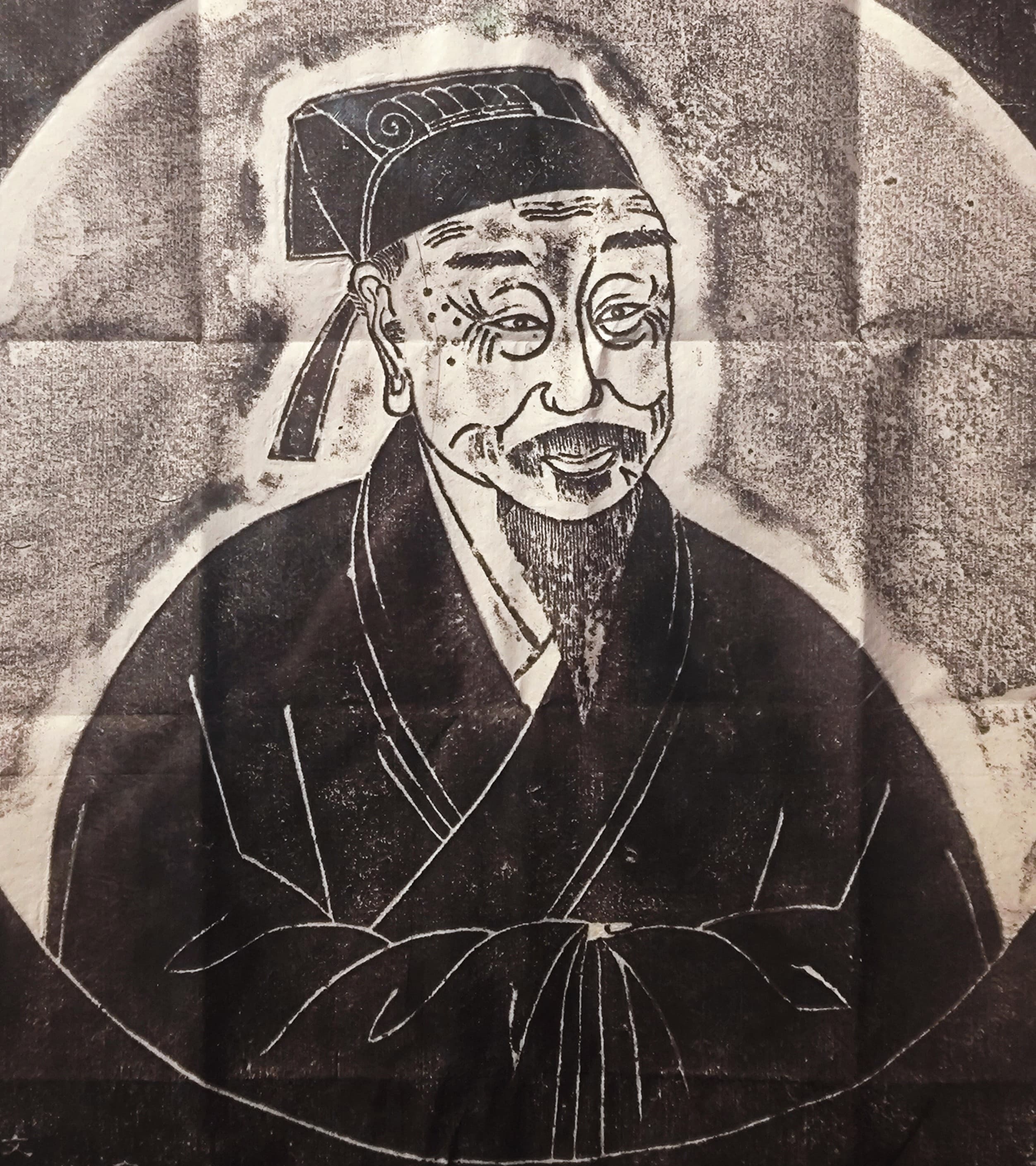
Zhu Xi
Great synthesizer of Neo-Confucianism — principle (li), vital force (qi), and the investigation of things.
Overview
The towering synthesizer of Neo-Confucianism (the Cheng-Zhu school), who reorganized the Confucian tradition into a coherent metaphysical system that dominated Chinese thought for centuries. He held that reality is constituted by li (principle or pattern) and qi (vital, material force), with the 'Supreme Ultimate' (taiji) as the totality of principle. Self-cultivation proceeds through the 'investigation of things' (gewu) to grasp their principle. He canonized the 'Four Books', whose study through his commentaries became the basis of the civil service examinations from 1313 to 1905.
What they supported — and why
Principle (li) and vital force (qi)
SupportedEverything is constituted by li (its principle or pattern) and qi (its material force); principle is one, though its manifestations are many.
WhyThings have both an intelligible nature (li) and a concrete substance (qi); together these explain both the order and the variety of the world.
The investigation of things (gewu zhizhi)
SupportedExtend knowledge by investigating the principle in things and affairs, in books and in the world.
WhySince principle is present in all things, patient study of them cultivates the mind and reveals the moral order, which is 'inexhaustible'.
Cultivation toward the Supreme Ultimate
SupportedThrough study, reverence, and practice, one aligns the mind with principle and the taiji.
WhyHuman nature is originally good (it is principle), so cultivation clears the obscuring qi and lets our innate moral nature shine forth.
Causes championed
- A systematic Confucian metaphysics
- Moral self-cultivation through learning
- The authority of the Four Books
Issues wrestled with
- What constitutes reality — principle or force?
- How are knowledge and virtue cultivated?
- What is human nature?
Hurdles faced
- His teaching was banned as 'false learning' late in his life before its later triumph
- Welding diverse Song thinkers into one system
Works & books
2 catalogued. Status shows how much survives to today.
Commentaries on the Four Books
SurvivesOn the Great Learning, Doctrine of the Mean, Analects, and Mencius — the core of the imperial examination curriculum until 1905.
Reflections on Things at Hand (with Lü Zuqian)
SurvivesAn influential anthology of Neo-Confucian thought.
Read the texts free
Their works online — Open Library catalogues 0 works & editions.
The influence network
See Zhu Xi in the map →Influenced by
Influenced
In their words
“Without principle there would be no things; without vital force, principle would have nothing to inhere in.”
— paraphrase of Zhu Xi
Legacy
His synthesis became the orthodox interpretation of Confucianism across East Asia for six centuries — one of the most institutionally influential philosophies in history.
Further reading
Cross-checked against these authoritative references.