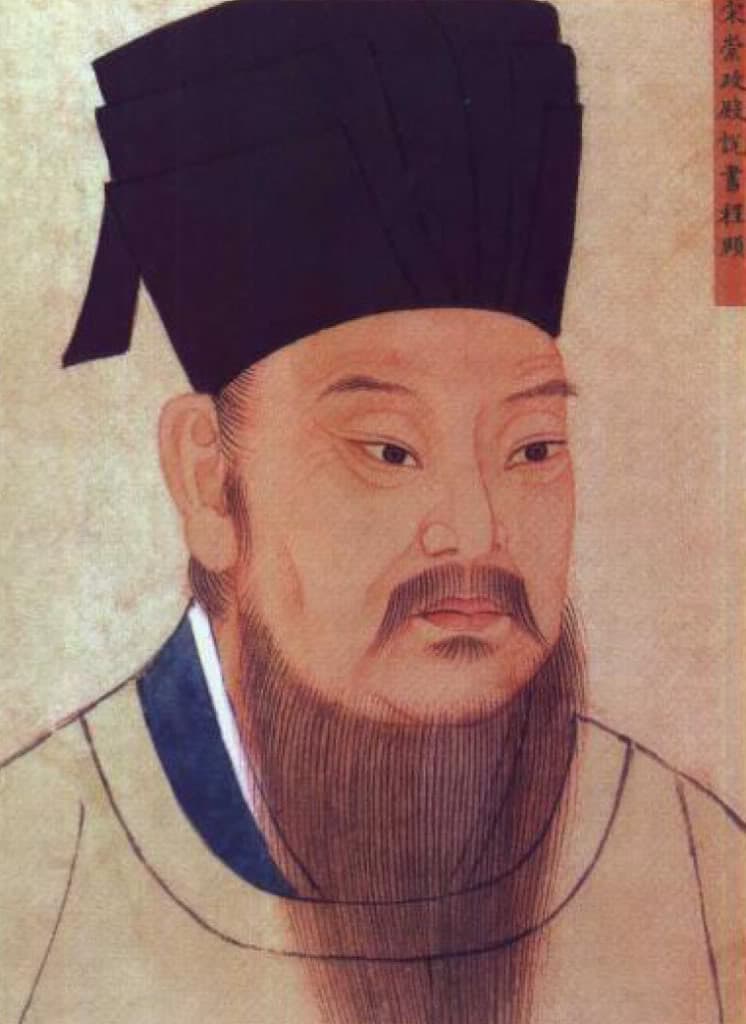
Cheng Yi
Co-founder of Neo-Confucian 'principle' philosophy — the 'Cheng' of the Cheng-Zhu school.
Overview
With his brother Cheng Hao, Cheng Yi was a founding figure of Neo-Confucianism whose emphasis on principle (li) gave the movement its rationalist backbone. The tradition he shaped, completed by Zhu Xi, is named the 'Cheng-Zhu school' after them. He held that a single principle (li) underlies and orders all things, that human nature is originally good because it is principle, and that self-cultivation proceeds through reverent seriousness and the 'investigation of things' to grasp their principle.
What they supported — and why
Principle (li) orders all things
SupportedOne universal principle (li) underlies and pervades everything; each thing has its principle, and all are one.
WhyThe intelligible order and moral pattern of the world require a single rational principle expressed in the many, grounding both nature and ethics.
Human nature is principle, and is good
SupportedHuman nature at root is identical with principle and therefore good; evil comes from the obscuring of qi (material force).
WhyIf nature is principle and principle is good, then wrongdoing is a distortion by material endowment, not the true nature.
Reverence and the investigation of things
SupportedCultivate the mind through reverent seriousness (jing) and extend knowledge by investigating the principle in things.
WhyMoral clarity requires both an attentive, composed mind and patient study of the principle present in each thing and affair.
Causes championed
- A rationalist metaphysics of principle
- Moral self-cultivation
- The revival of Confucian learning
Issues wrestled with
- What orders the world?
- Is human nature good?
- How are knowledge and virtue cultivated?
Hurdles faced
- Political factionalism that led to his dismissal and the banning of his teaching
- Establishing the new Confucian metaphysics against entrenched scholarship
Works & books
2 catalogued. Status shows how much survives to today.
Commentary on the Book of Changes (Yizhuan)
SurvivesHis major work reading the Yijing through the philosophy of principle.
Surviving Works of the Two Chengs (with Cheng Hao)
SurvivesRecorded sayings and essays of the Cheng brothers.
Read the texts free
Their works online — Open Library catalogues 7 works & editions.
The influence network
See Cheng Yi in the map →Influenced by
Influenced
In their words
“Principle is one, but its manifestations are many.”
— attributed to Cheng Yi
Legacy
He gave Neo-Confucianism its philosophy of principle; through Zhu Xi, the Cheng-Zhu school became the orthodoxy of East Asia for six centuries.
Further reading
Cross-checked against these authoritative references.