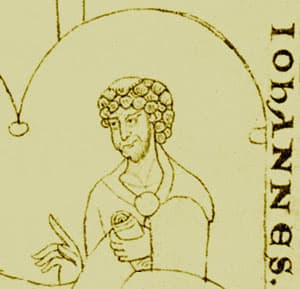
John Scotus Eriugena
Carolingian Irishman who built a daring Neoplatonic system of all reality.
Overview
The outstanding philosopher of the early Middle Ages, the Irish scholar Eriugena worked at the court of Charles the Bald. He translated Pseudo-Dionysius into Latin and built an ambitious systematic cosmology, the Periphyseon (On the Division of Nature), dividing 'Nature' into what creates and is created and back again. Bold and often heterodox — verging on identifying God with creation — his work was later condemned, yet it kept Neoplatonic metaphysics alive in the Latin West.
What they supported — and why
The division of Nature
SupportedAll reality divides into four: what creates and is not created (God as source); creates and is created (the primary causes); is created and does not create (the world); neither creates nor is created (God as end).
WhyA single scheme of procession from and return to God can order the whole of reality.
God known only by negation
SupportedGod transcends being; creation is God's self-manifestation (theophany), and all things return to God.
WhyFollowing Dionysius, the ineffable God is best approached apophatically, and the cosmos reveals rather than contains him.
Reason and revelation agree
SupportedTrue reason and true authority cannot conflict; reason even guides the interpretation of authority.
WhyBoth reason and scripture come from God, so, rightly used, they must ultimately harmonize.
Causes championed
- A rational systematic theology
- The reconciliation of reason and faith
- Transmitting Greek Neoplatonism to the West
Issues wrestled with
- How is God related to creation?
- Can God be known?
- How do reason and authority relate?
Hurdles faced
- Charges verging on pantheism; the Periphyseon was condemned centuries later
- Working amid the scarce learning of the early Middle Ages
Works & books
2 catalogued. Status shows how much survives to today.
Periphyseon (On the Division of Nature)
SurvivesHis great systematic dialogue on the procession of all things from, and return to, God.
Latin translations of Pseudo-Dionysius
SurvivesRenderings that carried Greek Christian Neoplatonism into the Latin West.
Read the texts free
Their works online — Open Library catalogues 50 works & editions, 6 of them free to read in full.
The influence network
See John Scotus Eriugena in the map →Influenced by
Influenced
In their words
“We do not know what God is. God himself does not know what he is, because he is not any 'what'.”
— Periphyseon
Legacy
He kept systematic Neoplatonic philosophy alive through Europe's darkest centuries — a lone speculative giant of the early Middle Ages.
Further reading
Cross-checked against these authoritative references.