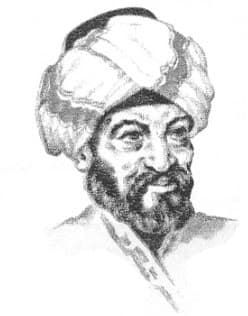
Al-Kindī
Abū Yūsuf Yaʿqūb ibn Isḥāq al-Kindī
The 'Philosopher of the Arabs' who first married Greek philosophy to Islam.
Overview
The first self-identified philosopher of the Islamic world, al-Kindī led the translation movement in Baghdad's House of Wisdom, bringing Greek science and philosophy into Arabic. A polymath in mathematics, astronomy, medicine, optics, and music, he argued that philosophy and revelation teach one truth, defended the createdness of the world against Aristotle's eternity, and made Arabic a language of philosophy — setting the agenda for all later falsafa.
What they supported — and why
Harmony of philosophy and revelation
SupportedThe truth reached by reason and the truth of prophecy agree; philosophy is a gift to be embraced by Muslims.
WhyTruth is one and comes from God, so knowledge from any source — including the Greeks — should be welcomed, not feared.
The world is created, not eternal
SupportedUnlike Aristotle, the cosmos has a beginning; God is its transcendent originating cause.
WhyAn actual infinite is impossible and the world is finite, so it must have been brought into being by God.
God as the True One
SupportedGod is the pure, absolute One, cause of all unity and being, beyond every attribute.
WhyAll multiplicity depends on a prior unity, so the ultimate cause must be perfectly and uniquely One.
Causes championed
- Bringing Greek learning into Islam
- The unity of reason and faith
- The mathematical sciences
Issues wrestled with
- Do philosophy and religion agree?
- Is the world eternal or created?
- What is God?
Hurdles faced
- Suspicion of the 'foreign sciences'
- Falling from favor and reportedly having his library confiscated under a later caliph
Works & books
2 catalogued. Status shows how much survives to today.
On First Philosophy
SurvivesHis metaphysics of the True One and the created cosmos.
Treatises on optics, medicine, music, and astronomy
PartialHundreds of works across the sciences; many are lost, some survive in Arabic and Latin.
Read the texts free
Their works online — Open Library catalogues 6 works & editions.
The influence network
See Al-Kindī in the map →In their words
“We should not be ashamed to acknowledge truth from whatever source it comes to us.”
— On First Philosophy
Legacy
He founded philosophy in the Islamic world and made Arabic a vehicle of science and reason for the coming golden age.
Further reading
Cross-checked against these authoritative references.