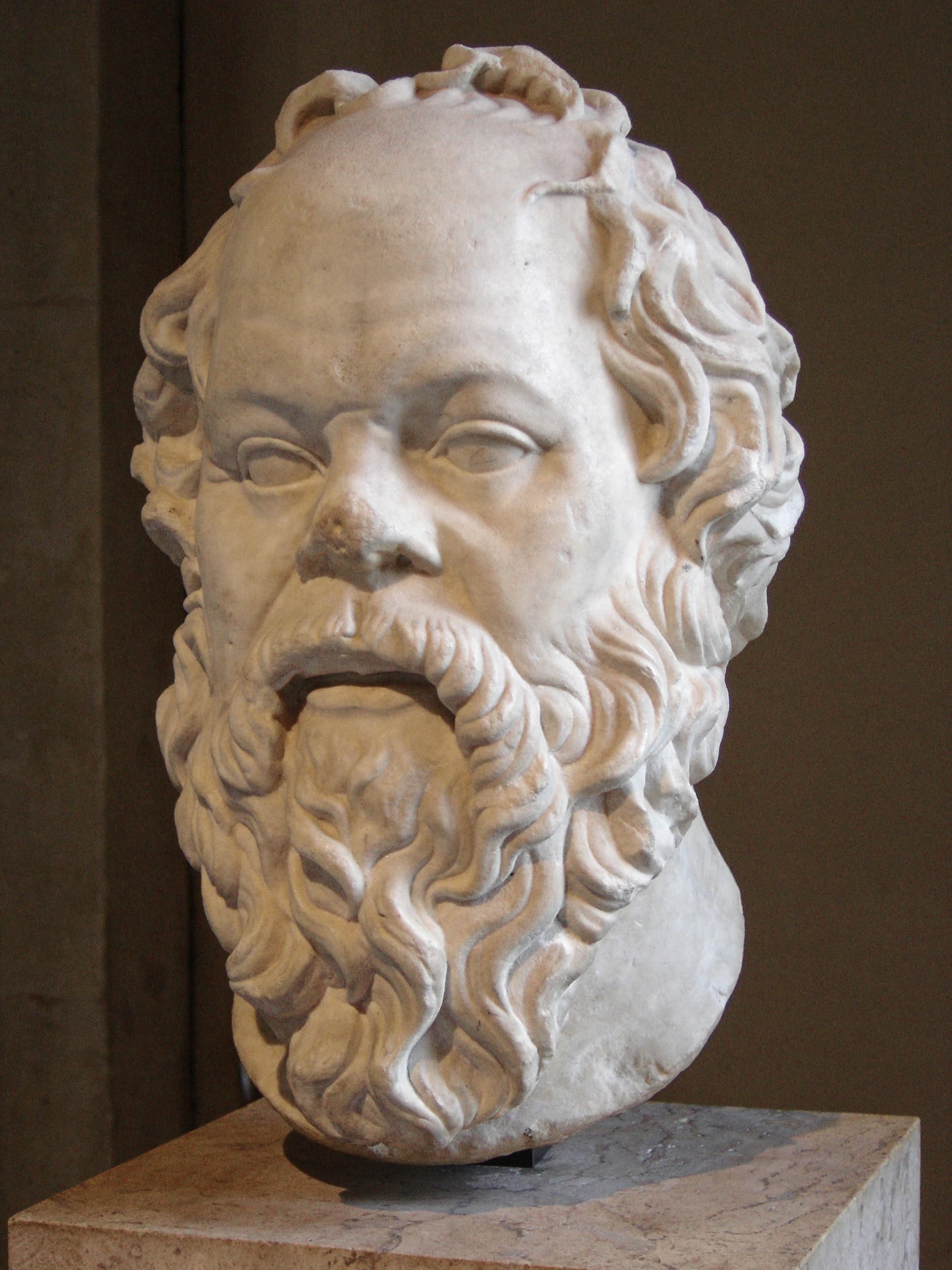
Socrates
Knew that he knew nothing; died for the examined life.
Overview
Socrates turned philosophy from the cosmos to the human soul, asking how one ought to live. He wrote nothing; we know him chiefly through Plato and Xenophon. In the agora he questioned Athenians about justice, courage, and piety, exposing that they could not define what they claimed to know — the 'Socratic method' (elenchus). He professed his own ignorance yet was called wisest by the oracle at Delphi precisely because he knew he did not know. Tried for impiety and corrupting the youth, he accepted a death sentence rather than abandon philosophy, drinking hemlock at 70.
What they supported — and why
The examined life
SupportedA human life is only worth living if one continually questions oneself and one's values.
WhyUnexamined beliefs go unjustified; virtue and happiness require knowing what is truly good.
Virtue is knowledge
SupportedTo know the good is to do it; wrongdoing stems from ignorance, not malice.
WhyNo one knowingly harms themselves, and vice harms the soul — so anyone who truly grasped the good would choose it.
Socratic ignorance
SupportedWisdom begins in admitting how little one knows.
WhyRecognizing ignorance is the necessary first step to genuine inquiry; false certainty blocks learning.
Care of the soul
SupportedTending the soul's goodness matters more than wealth, reputation, or the body.
WhyThe soul is the true self, and its virtue is the only thing that makes a life good.
Causes championed
- The examined life
- Intellectual honesty over reputation
- Obedience to conscience and law even unto death
Issues wrestled with
- What is justice, courage, piety, virtue?
- Can virtue be taught?
- How should one live and die?
Hurdles faced
- Made powerful enemies by publicly exposing their ignorance
- Tried and executed by Athens on charges of impiety and corrupting youth
Works & books
1 catalogued. Status shows how much survives to today.
(none — wrote nothing)
LostSocrates left no writings by choice; his thought survives through Plato's dialogues, Xenophon's memoirs, and Aristophanes' satire.
Read the texts free
Their works online — Open Library catalogues 7 works & editions.
The influence network
See Socrates in the map →Influenced by
In their words
“The unexamined life is not worth living.”
— Plato, Apology
“I know that I know nothing.”
— paraphrase of the Apology
Legacy
He redefined philosophy as the rational pursuit of how to live, and became the model of the thinker who dies rather than betray the truth.
Essays
Pieces from the Journal that take up Socrates in more depth.
Follow their questions
This thinker is a stop on these paths through philosophy.
Further reading
Cross-checked against these authoritative references.