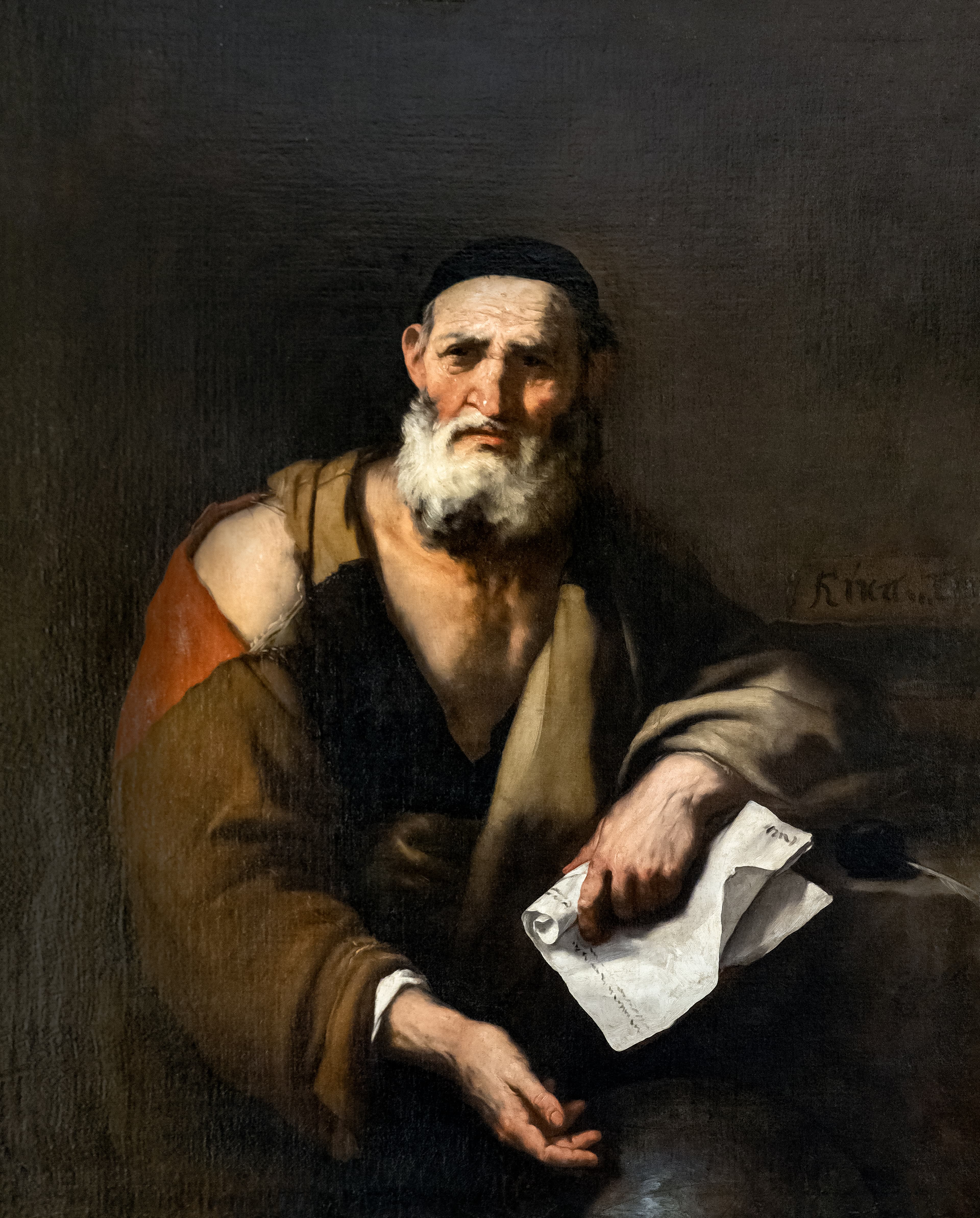
Leucippus
Founder of atomism — 'nothing happens in vain, but all from reason and necessity.'
Overview
A shadowy but pivotal figure, Leucippus is credited by Aristotle with originating the atomic theory later developed by his pupil Democritus. So little survives that some ancients doubted he existed, yet the core breakthrough is his: reality consists of indivisible bodies (atoms) moving through empty space (the void), and all events unfold by mechanical necessity. His thought is nearly inseparable from Democritus', but the founding hypothesis and its determinism are traditionally his.
What they supported — and why
Atoms and the void
SupportedWhat exists is countless indivisible bodies moving in empty space; the void is real 'not-being' that lets them move and combine.
WhyIt answers Parmenides: atoms are each a tiny unchanging 'being', while the void supplies the emptiness needed for motion and plurality.
Strict necessity
SupportedEvery event happens by necessity through atomic motion and collision; nothing occurs at random or by design.
WhyMechanical causes among atoms fully account for the world, so no purpose or gods are required to explain it.
Causes championed
- Mechanistic explanation of nature
- Causal determinism
Issues wrestled with
- How are motion and plurality possible?
- Is there empty space?
- Is the world purposeful or necessary?
Hurdles faced
- Near-total loss of his writings
- Being overshadowed by his pupil Democritus
- Ancient doubts about his very existence
Works & books
2 catalogued. Status shows how much survives to today.
The Great World-System
LostThe founding atomist cosmology (also credited by some to Democritus); not preserved.
On Mind
Fragments onlySurvives as a single sentence — his only extant words — asserting universal necessity.
Read the texts free
Their works online — Open Library catalogues 1 works & editions.
The influence network
See Leucippus in the map →Influenced by
Influenced
In their words
“Nothing happens at random; everything happens out of reason and by necessity.”
— On Mind (his one surviving sentence, DK B2)
Legacy
He originated the atomic hypothesis that, through Democritus and Epicurus, became the deepest ancestor of the modern scientific picture of matter.
Further reading
Cross-checked against these authoritative references.