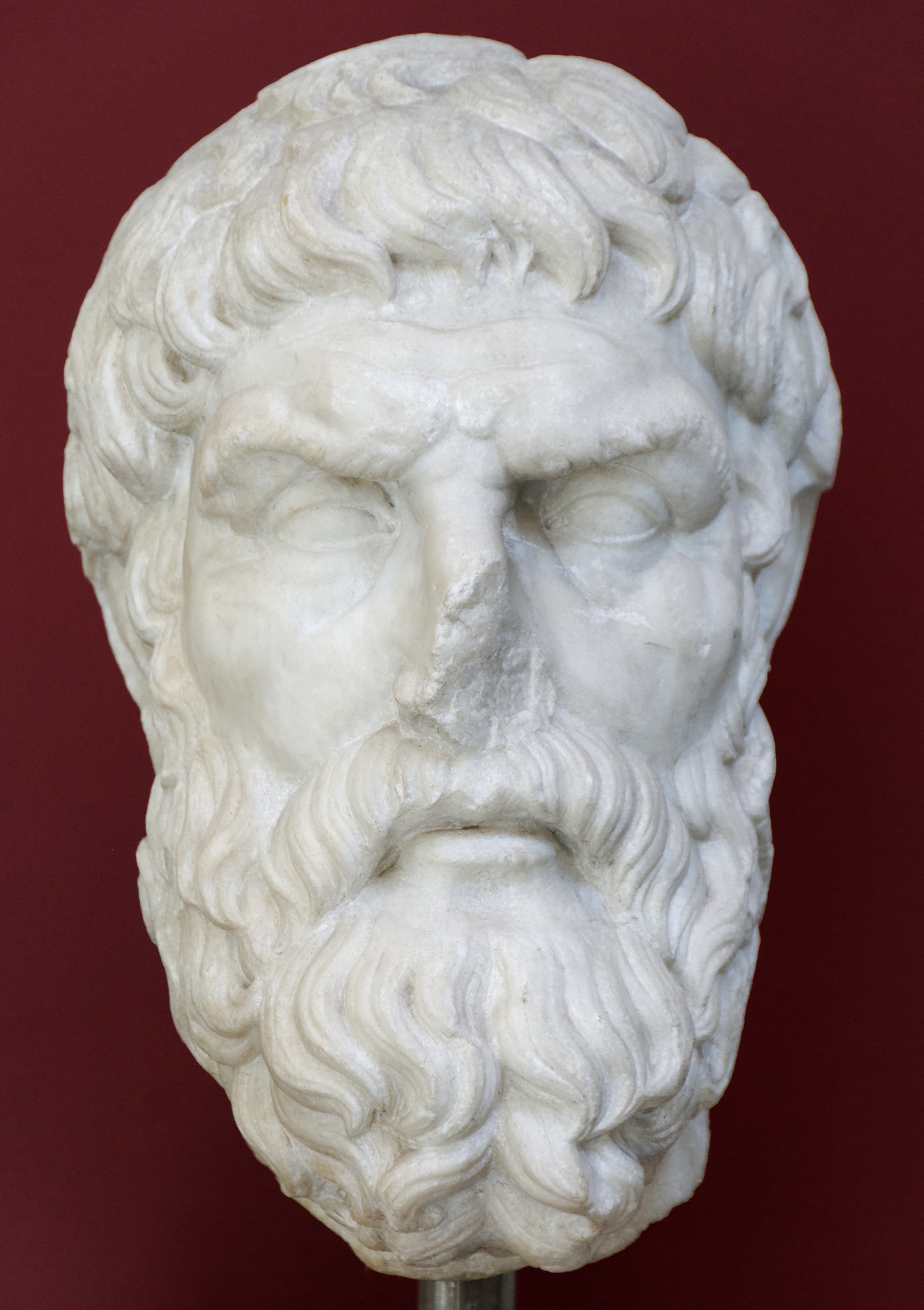
Epicurus
Pleasure as tranquillity; do not fear the gods or death.
Overview
Epicurus founded a community called the Garden in Athens, open to women and slaves, dedicated to a life of tranquil pleasure. Adopting Democritus' atomism, he argued that since everything is atoms and void, the soul dissolves at death and the gods do not meddle in human affairs — so the two great sources of anxiety, fear of death and fear of the gods, are groundless. The highest pleasure is ataraxia (freedom from disturbance) and aponia (absence of pain), best achieved through modest desires, friendship, and philosophical understanding.
What they supported — and why
Pleasure is the highest good
SupportedThe goal of life is pleasure, rightly understood as tranquillity and the absence of physical and mental pain — not indulgence.
WhyAll animals pursue pleasure and avoid pain from birth; the wise minimize disturbance rather than chase intense, risky pleasures.
Death is nothing to us
SupportedSince the soul is atomic and perishes with the body, death is the absence of all sensation, and so cannot harm us.
Why'Where death is, we are not; where we are, death is not' — fearing a state one will never experience is irrational.
The gods do not intervene
SupportedGods exist as blessed, untroubled beings but take no interest in human affairs.
WhyA perfect being would not trouble itself with our world; fear of divine punishment is therefore baseless.
The atomic swerve
SupportedAtoms occasionally swerve unpredictably, breaking strict determinism.
WhyWithout the swerve there would be no collisions and no free will; it preserves human responsibility.
Causes championed
- Freedom from fear and anxiety
- Friendship as the greatest aid to happiness
- A simple, self-sufficient life
Issues wrestled with
- What is the true nature of pleasure?
- Should we fear death and the gods?
- Is the world determined or free?
Hurdles faced
- Chronic ill health, which he endured while praising tranquillity
- Slandered by rivals as a crude hedonist — a caricature that stuck for centuries
Works & books
5 catalogued. Status shows how much survives to today.
Letter to Menoeceus
SurvivesA concise summary of his ethics — pleasure, death, the gods, and prudence.
Letter to Herodotus
SurvivesSummary of his physics and atomism.
Letter to Pythocles
SurvivesOn astronomical and meteorological phenomena.
Principal Doctrines (Kyriai Doxai)
SurvivesForty aphorisms distilling Epicurean teaching.
On Nature
Fragments onlyHis 37-book magnum opus on physics; survives only in charred Herculaneum papyrus fragments.
Read the texts free
Their works online — Open Library catalogues 84 works & editions, 5 of them free to read in full.
The influence network
See Epicurus in the map →Influenced by
Influenced
In their words
“Death is nothing to us; when we exist, death is not, and when death exists, we are not.”
— Letter to Menoeceus
“It is impossible to live pleasantly without living wisely and well and justly.”
— Principal Doctrines
Legacy
Epicureanism offered a fully naturalistic ethics — no afterlife, no divine judgment, happiness here and now — and remains a living alternative in secular thought.
Follow their questions
This thinker is a stop on these paths through philosophy.
Further reading
Cross-checked against these authoritative references.