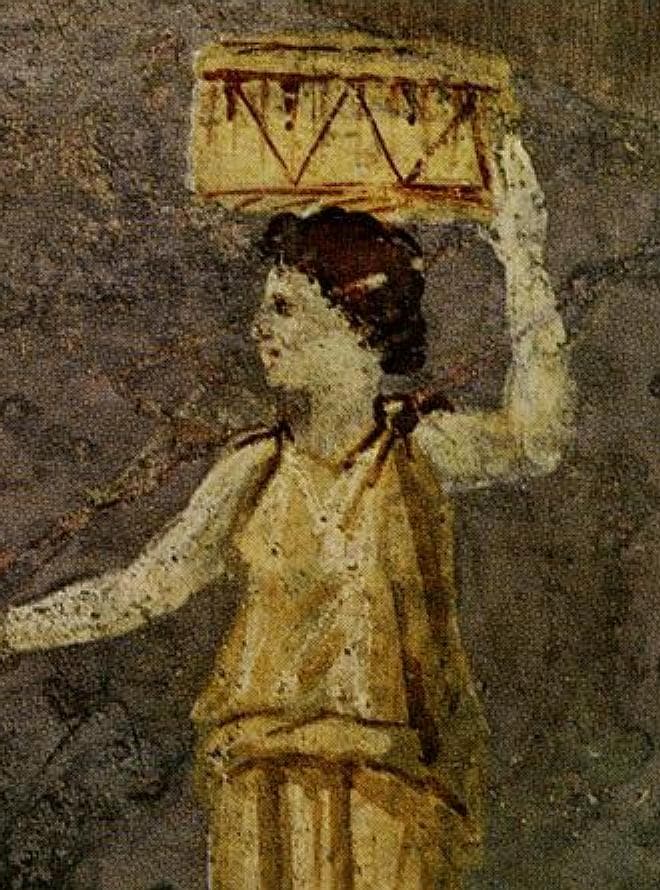
Hipparchia of Maroneia
Cynic who chose the ragged life over wealth — one of antiquity's few named women thinkers.
Overview
Rare among ancient women, Hipparchia is remembered as a philosopher in her own right. Wealthy and well-born, she fell in love with the Cynic Crates and — against her family's fierce objections — chose to marry him and live the Cynic life as his full equal, wearing the same clothes, living in public, and debating men. She embodied the Cynic claim that virtue is the same for women as for men.
What they supported — and why
Women's equal capacity for philosophy
SupportedA woman can live the philosophical life fully and publicly, as a man's equal.
WhyVirtue is human, not gendered; the life according to nature is open to anyone willing to live it.
Education over convention
SupportedSpending one's life on philosophy is better than on the loom and the roles convention assigns to women.
WhyWhat custom prescribes for women wastes the very capacity for reason and virtue they share with men.
Causes championed
- Women's right to philosophy
- Living according to nature
- Defiance of empty convention
Issues wrestled with
- Can women be philosophers?
- What does convention wrongly demand of us?
Hurdles faced
- Her family's fierce opposition to the match and the life
- Ridicule and hostility as a woman in public philosophy
Works & books
1 catalogued. Status shows how much survives to today.
Letters and treatises (attributed)
LostWritings ascribed to her do not survive; she is known chiefly through Diogenes Laërtius.
The influence network
See Hipparchia of Maroneia in the map →Influenced by
Influenced
In their words
“Do you think I have decided wrongly, if I devote to education the time I would have wasted at the loom?”
— to a man who mocked her, via Diogenes Laërtius
Legacy
One of the very few women philosophers named in antiquity, she stands as an early emblem of women's claim to the life of the mind.
Further reading
Cross-checked against these authoritative references.