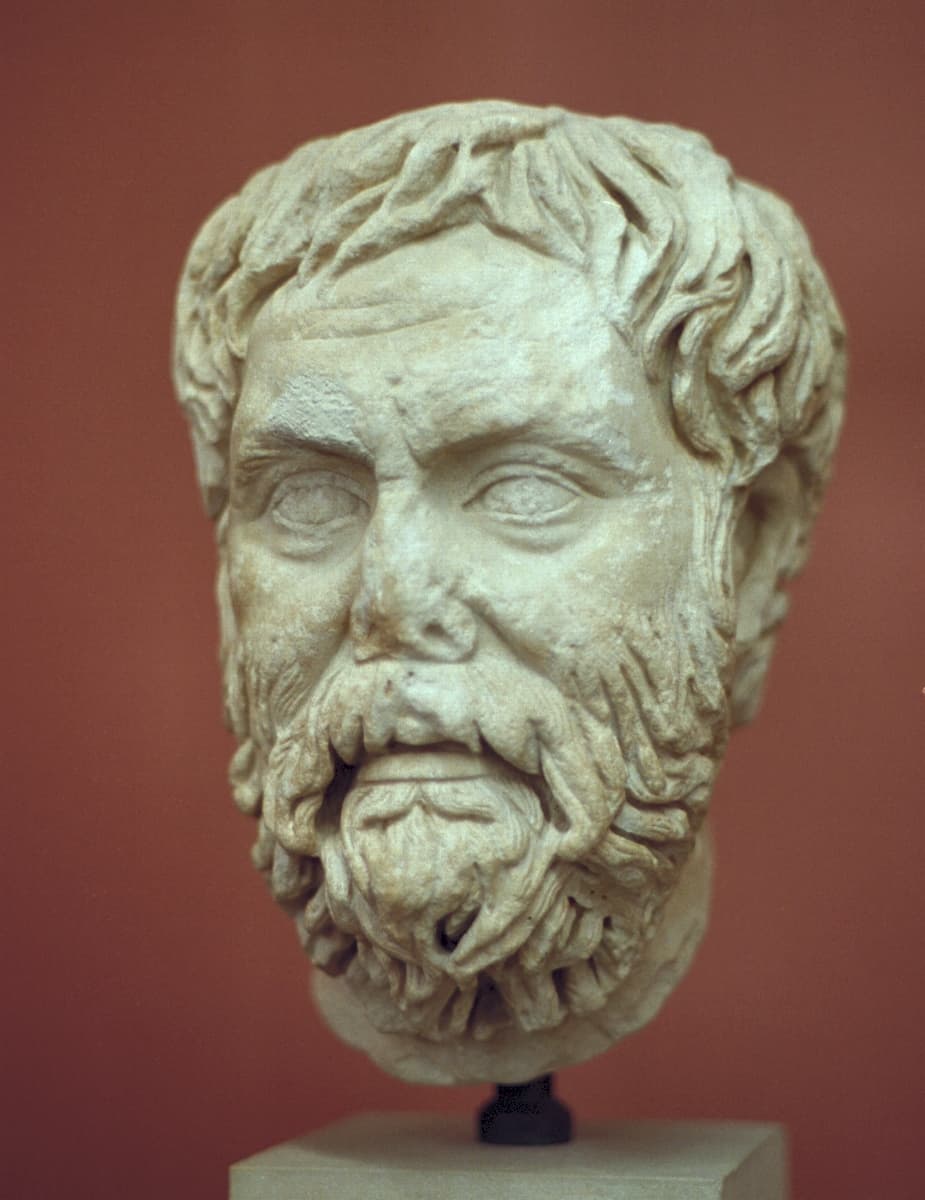
Pyrrho of Elis
Founder of Skepticism — suspend judgement to find peace.
Overview
Pyrrho, who reportedly traveled to India with Alexander's army and met 'naked sages', founded Greek skepticism. He taught that we cannot know the true nature of things, since for every argument there is an equal and opposite one. The wise response is epochē — suspension of judgement — which brings ataraxia, tranquillity. Like Socrates and Diogenes he wrote nothing; his outlook survives through his pupil Timon and, centuries later, the systematizer Sextus Empiricus.
What they supported — and why
Things are indeterminable
SupportedWe cannot know how things really are in themselves — appearances conflict and no criterion settles them.
WhyFor any claim, equally strong opposing claims can be made, so no judgement is more justified than its contrary.
Suspend judgement (epochē)
SupportedWithhold assent on all matters of how things really are; go by appearances for practical life.
WhySince we cannot decide, refusing to commit frees us from the errors and anxieties of dogmatic belief.
Tranquillity follows
SupportedSuspending judgement yields ataraxia — untroubled calm.
WhyMuch distress comes from believing things are good or bad by nature; dropping such beliefs quiets the mind.
Causes championed
- Intellectual humility
- Peace of mind through non-attachment to belief
Issues wrestled with
- Can we know reality as it is?
- Is there a criterion of truth?
- How does one live without certainty?
Hurdles faced
- The charge that a skeptic cannot act or live consistently
- Leaving no writings, risking distortion
Works & books
1 catalogued. Status shows how much survives to today.
(none — wrote nothing)
LostPyrrho left no writings; his views survive via Timon of Phlius and later Sextus Empiricus.
The influence network
See Pyrrho of Elis in the map →Influenced by
Influenced
In their words
“No single thing is in itself any more this than that.”
— reported by Aristocles via Eusebius
Legacy
Pyrrhonism became one of antiquity's three great schools of life-guidance and, rediscovered in the Renaissance, helped launch modern skeptical philosophy.
Follow their questions
This thinker is a stop on these paths through philosophy.
Further reading
Cross-checked against these authoritative references.