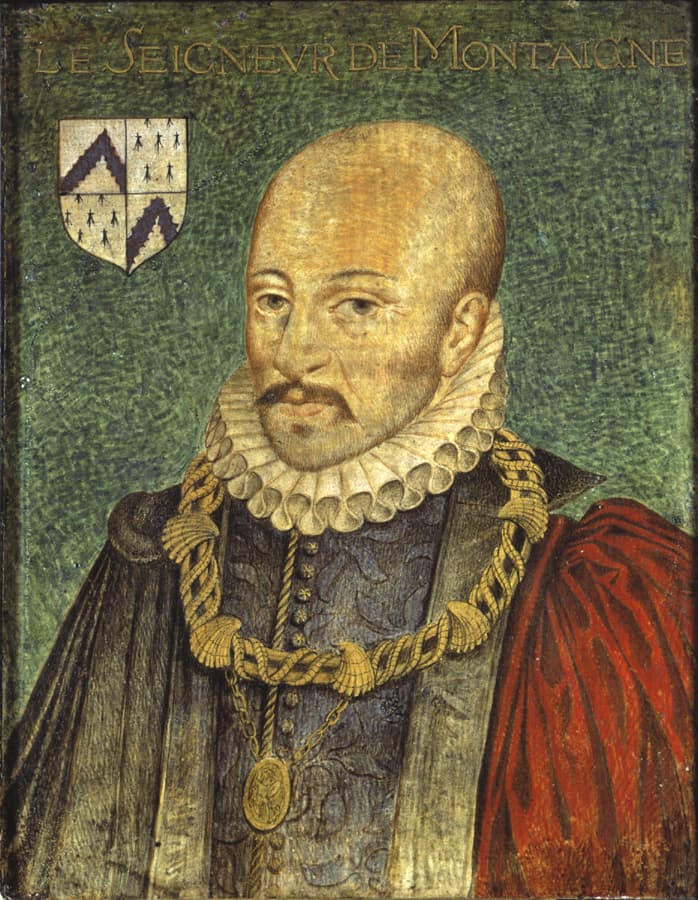
Michel de Montaigne
Inventor of the essay; a skeptical, humane inquiry into the self.
Overview
A French nobleman who retired to his tower library and invented the personal essay (essai, 'attempt') as a way of thinking on the page. With disarming honesty he examined his own experience, moods, and contradictions to explore what it is to be human. Reviving ancient skepticism — his motto 'Que sais-je?' ('What do I know?') — he distrusted dogmatism and cruelty, prized tolerance and self-knowledge, and accepted human limitation with humor and grace amid the religious wars of his age.
What they supported — and why
Skepticism — 'What do I know?'
SupportedSuspend confident judgement; our reason and senses are fallible and our opinions shift with custom and mood.
WhyThe endless disagreement of philosophers and the variability of human belief show certainty is beyond us, counseling humility.
Self-examination as philosophy
SupportedStudy oneself honestly — one's body, habits, fears, and changes — as the nearest and most instructive subject.
Why'Each man bears the entire form of the human condition'; knowing oneself truthfully is the surest path to knowing humanity.
Tolerance and against cruelty
SupportedDistrust dogmatism and fanaticism; cruelty is the worst vice, and difference should be met with understanding.
WhyAmid religious war he saw certainty breed atrocity, so humility, moderation, and humaneness are the wiser course.
Causes championed
- Self-knowledge
- Tolerance and moderation
- Intellectual humility
- The examined ordinary life
Issues wrestled with
- What can we really know?
- What is it to be human?
- How should we treat those who differ from us?
Hurdles faced
- Writing amid the French Wars of Religion
- Resisting the fanaticism of his age while serving in public life
Works & books
1 catalogued. Status shows how much survives to today.
Essays
SurvivesThe founding work of the personal essay — candid explorations of the self and the human condition.
Read the texts free
26 of Michel de Montaigne’s works are free to read in full — public-domain English editions on Project Gutenberg, matched from Gutenberg’s own catalogue.
Every edition online — Open Library catalogues 775 works & editions, 81 of them free to read in full.
The influence network
See Michel de Montaigne in the map →In their words
“What do I know?”
— Essais (his skeptical motto)
Legacy
He created the essay and a new model of honest self-inquiry; his skeptical humanism shaped the modern examined life.
Further reading
Cross-checked against these authoritative references.