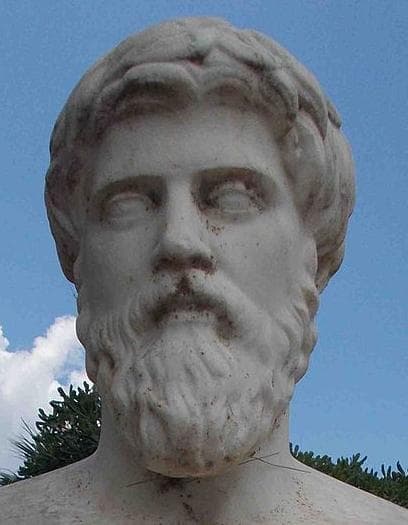
Plutarch
Platonist priest and biographer whose Lives and Moralia shaped Western character.
Overview
A Greek Middle Platonist, moralist, and priest at Delphi, Plutarch is best known for the Parallel Lives — paired biographies of Greek and Roman figures — and the Moralia, a vast collection of essays on ethics, religion, psychology, and more. Philosophically he defended a transcendent God, the reality of the soul, and divine providence against Stoic and Epicurean materialism, and read myth and religion symbolically. Above all he was a moral educator whose influence on later literature and ethics is immense.
What they supported — and why
Platonic dualism and providence
SupportedA good God and a real soul exist, and the cosmos is providentially ordered.
WhyAgainst Stoic materialism and Epicurean chance, mind and goodness must be prior to matter, not products of it.
Character revealed in small acts
SupportedBiography teaches virtue by showing how great figures actually behaved in telling moments.
WhyA jest or a phrase often reveals character better than great battles, so vivid examples instruct morally.
Moderation of the passions
SupportedVirtue tempers and directs the emotions rather than eradicating them.
WhyAgainst Stoic apatheia, emotions rightly moderated by reason serve the good life — a Platonic and Aristotelian mean.
Causes championed
- Moral education by example
- Platonic piety and providence
- Moderation
- Cultural tolerance
Issues wrestled with
- Is the cosmos providential?
- How is virtuous character formed?
- How should myth and religion be read?
Hurdles faced
- Writing as a Greek under Roman rule
- Harmonizing traditional religion with philosophy
Works & books
2 catalogued. Status shows how much survives to today.
Parallel Lives
SurvivesPaired biographies of eminent Greeks and Romans, drawing moral lessons from their characters.
Moralia
SurvivesSome 78 essays on ethics, religion, and psychology — On Isis and Osiris, On the Control of Anger, and many more.
Read the texts free
17 of Plutarch’s works are free to read in full — public-domain English editions on Project Gutenberg, matched from Gutenberg’s own catalogue.
Every edition online — Open Library catalogues 1,127 works & editions, 211 of them free to read in full.
The influence network
See Plutarch in the map →In their words
“The mind is not a vessel to be filled, but a fire to be kindled.”
— attributed (On Listening)
“Character is simply habit long continued.”
— Moralia
Legacy
He transmitted Greco-Roman moral culture to the modern world; countless later ideas of virtue — and Shakespeare's Roman plays — descend from him.
Further reading
Cross-checked against these authoritative references.