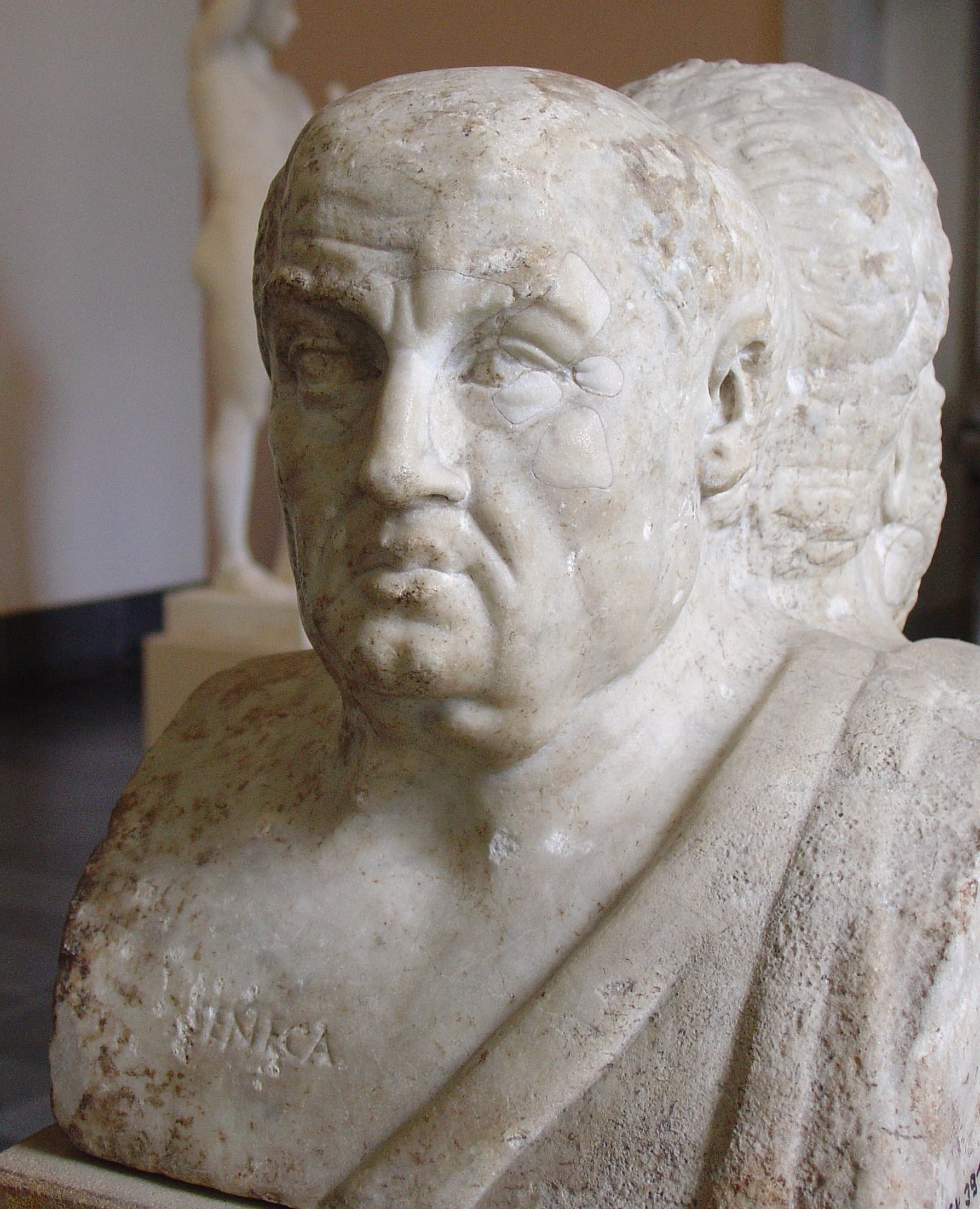
Seneca
Lucius Annaeus Seneca (the Younger)
Stoic statesman and playwright who taught how to live — and how to die.
Overview
A Roman Stoic philosopher, dramatist, and statesman, Seneca served as tutor and later advisor to the emperor Nero. His Letters to Lucilius and moral essays are Stoicism at its most humane and practical — on the shortness of life, the mastery of anger, tranquillity of mind, clemency, and facing death. His life embodied Stoic tension: enormous wealth alongside a philosophy of indifference to it. Ordered by Nero to take his own life, he died with the calm he had long counseled.
What they supported — and why
Philosophy is training for living and dying well
SupportedWisdom is a daily, practical discipline of self-improvement toward virtue.
WhyKnowledge that does not change how one lives is worthless; virtue is the only good and must be constantly practiced.
Master the passions, above all anger
SupportedAnger is a temporary madness that reason should uproot before it takes hold.
WhyPassions rest on false judgements and destroy both tranquillity and justice, so they must be corrected at the source.
Time is our only true possession
SupportedLife is long enough if well used; most people squander it and only value it as it runs out.
WhyWe guard money jealously yet waste time — the one irreplaceable thing — so we must live deliberately now.
Causes championed
- Practical wisdom for everyday life
- Clemency and humane ethics
- Preparing calmly for death
- The right use of time
Issues wrestled with
- How should one live and die well?
- How to handle anger, grief, and fortune?
- What is the value of time?
Hurdles faced
- Exiled to Corsica for eight years
- The moral compromise of serving the tyrant Nero
- Forced by Nero to commit suicide
Works & books
5 catalogued. Status shows how much survives to today.
Letters to Lucilius
Survives124 letters of practical Stoic guidance — the most beloved of his works.
On the Shortness of Life
SurvivesAn essay arguing that life is long enough if not wasted.
On Anger
SurvivesA three-book analysis of anger and how reason can master it.
On the Tranquillity of Mind; On Clemency; On Providence
SurvivesMoral essays on peace of mind, mercy in rulers, and why the good suffer.
Tragedies (Medea, Thyestes, Phaedra…)
SurvivesInfluential Latin tragedies that shaped Renaissance drama.
Read the texts free
8 of Seneca’s works are free to read in full — public-domain English editions on Project Gutenberg, matched from Gutenberg’s own catalogue.
Every edition online — Open Library catalogues 1,297 works & editions, 103 of them free to read in full.
The influence network
See Seneca in the map →In their words
“It is not that we have a short time to live, but that we waste much of it.”
— On the Shortness of Life
“As long as you live, keep learning how to live.”
— Letters to Lucilius
Legacy
The most widely read Roman Stoic, his letters and essays turned Stoicism into a living guide to ordinary life for two thousand years.
Further reading
Cross-checked against these authoritative references.