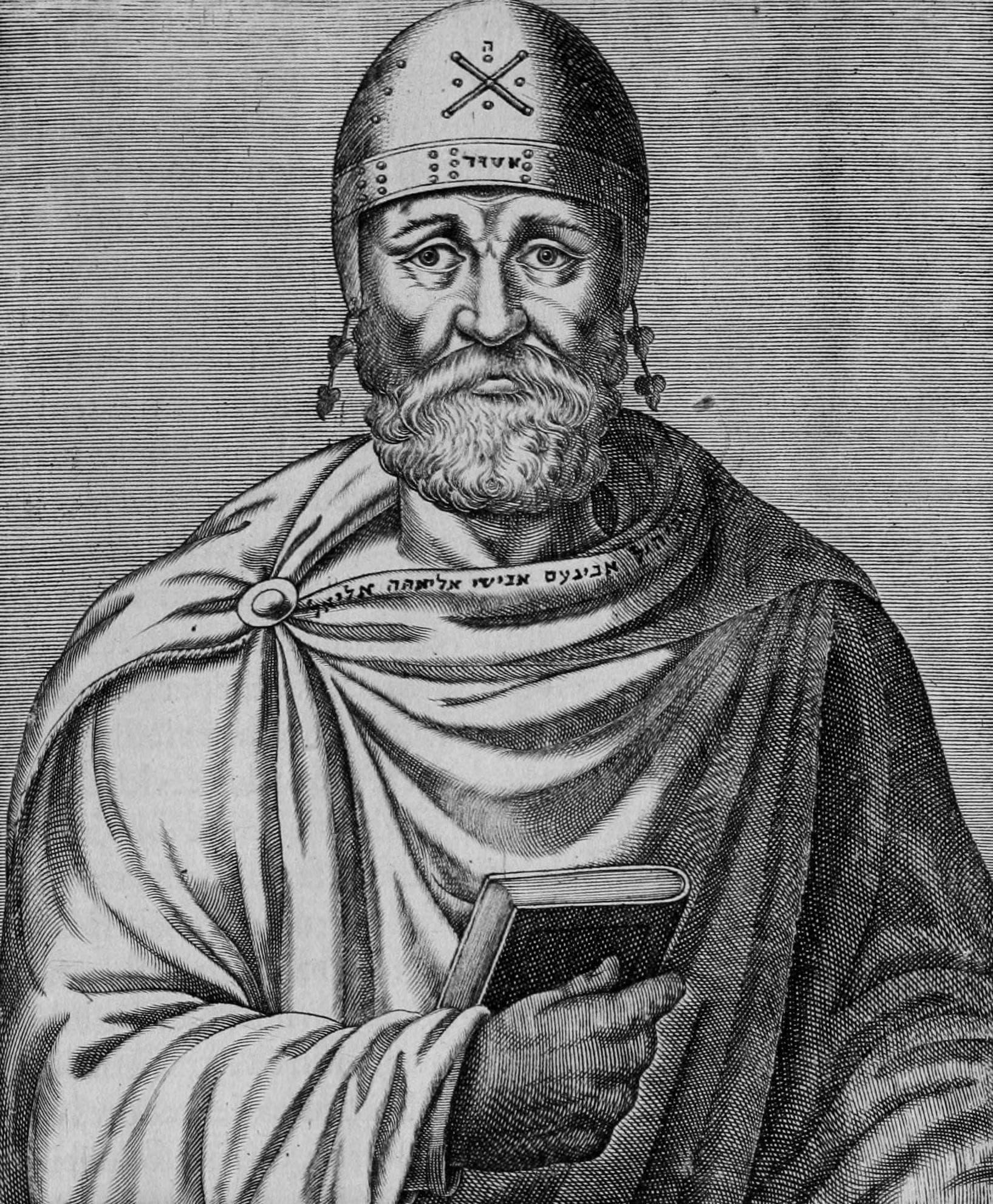
Philo of Alexandria
Fused the Torah with Plato; father of the allegorical reading of scripture.
Overview
A Hellenistic Jewish philosopher of Alexandria, Philo synthesized Judaism with Greek philosophy — above all Platonism and Stoicism. He read the Hebrew scriptures allegorically, treating their narratives as vehicles of philosophical and moral truth, and developed the concept of the divine Logos as an intermediary between the wholly transcendent God and the created world. He led a Jewish embassy to the emperor Caligula to plead his community's cause. His fusion of revelation and reason profoundly shaped later Christian theology.
What they supported — and why
Allegorical interpretation
SupportedScripture's literal stories encode deeper philosophical and moral truths beneath the surface.
WhyAn infinite, rational God speaks in figures; reason is required to uncover the hidden sense within the letter.
The Logos
SupportedA divine Reason or Word mediates between the utterly transcendent God and the material creation.
WhyA perfect, unknowable God needs an intermediary through which to relate to, and give order to, the world.
God is transcendent and unnameable
SupportedThat God exists is knowable; what God is in essence exceeds all human categories.
WhyThe divine surpasses being and description, so we can grasp God's existence but never God's nature.
Causes championed
- The harmony of faith and reason
- The transcendence of God
- Allegorical wisdom
Issues wrestled with
- How can an infinite God relate to a finite world?
- How should scripture be read?
- What can be known of God?
Hurdles faced
- Anti-Jewish violence and pogroms in Alexandria
- Pleading his people's case before a hostile emperor
Works & books
3 catalogued. Status shows how much survives to today.
Allegorical Interpretation; On the Creation
SurvivesAllegorical commentaries reading Genesis as philosophy; largely preserved (by Christian copyists).
On the Life of Moses
SurvivesA philosophical portrait of Moses as lawgiver, prophet, and sage.
On the Embassy to Gaius
SurvivesHis firsthand account of the embassy to Caligula and the plight of Alexandria's Jews.
Read the texts free
Their works online — Open Library catalogues 0 works & editions.
The influence network
See Philo of Alexandria in the map →Influenced by
Influenced
In their words
“The Logos is the image of God, through whom the whole cosmos was framed.”
— paraphrase of Philo's doctrine
Legacy
He pioneered the reconciliation of revealed religion with philosophy and handed Christianity both the Logos and the allegorical method.
Further reading
Cross-checked against these authoritative references.