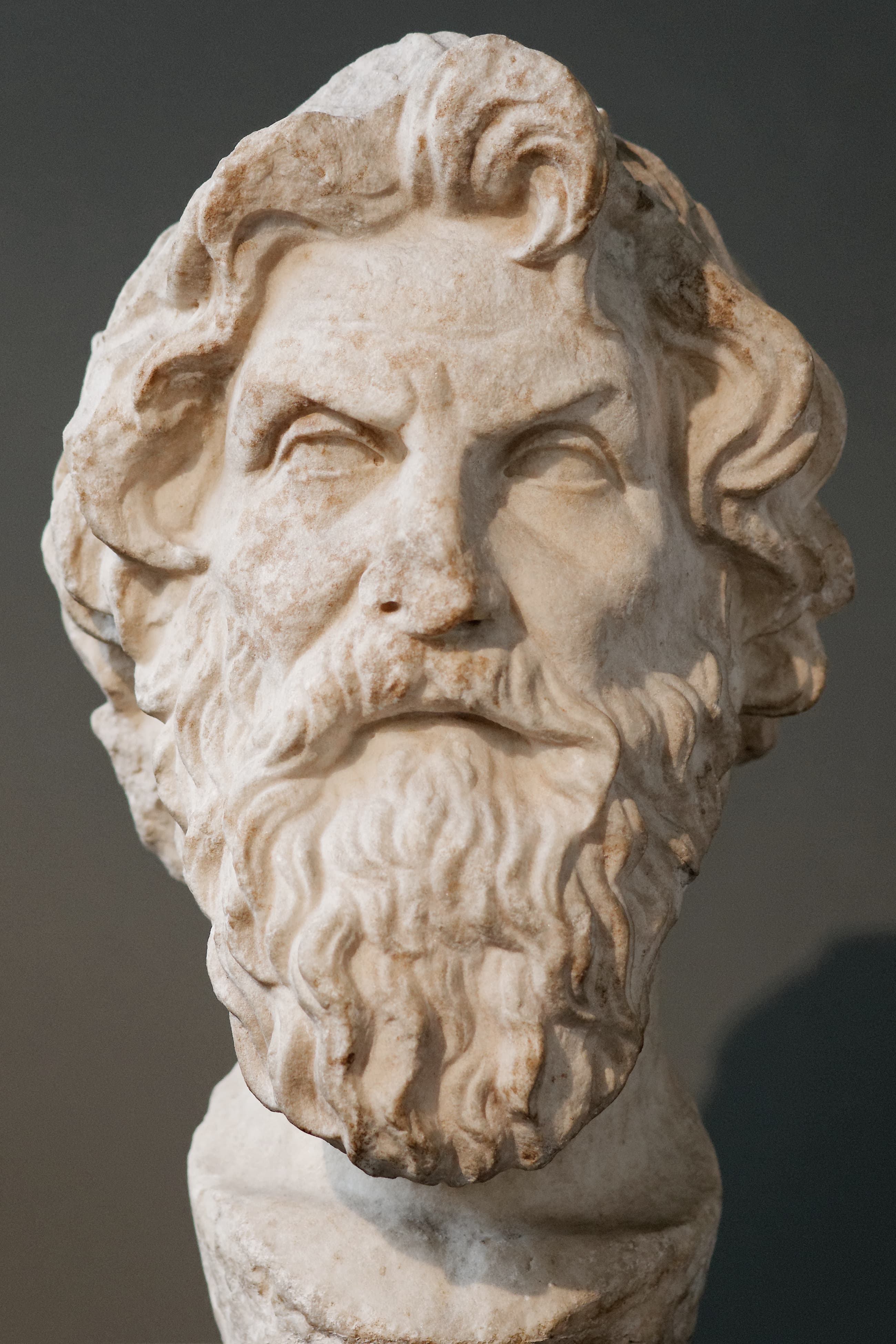
Antisthenes
Socratic ascetic and founder of Cynicism — virtue alone suffices for happiness.
Overview
A pupil of Gorgias who became a devoted follower of Socrates, Antisthenes drew from him a severe ethics of self-denial. He taught that virtue is teachable, is shown in deeds rather than words, and is by itself enough for happiness; pleasure and convention he despised. Emphasizing self-control and endurance, he is regarded as the forerunner — and by many the founder — of Cynicism, and the teacher of Diogenes. He also challenged Plato's Forms with an early nominalism.
What they supported — and why
Virtue suffices for happiness
SupportedVirtue, a matter of action not theory, is teachable and is the only thing needed for a good life.
WhyExternal goods are unreliable and can be stripped away; only virtuous character securely makes a life happy.
Ascetic self-sufficiency
SupportedReduce desire to the minimum; endure hardship and shun pleasure.
WhyDesire for pleasure and possessions enslaves us; freedom and self-sufficiency come from needing little.
Nominalism about universals
SupportedOnly particular things exist; general terms do not name separate realities — 'I see a horse, but not horseness.'
WhyUniversals like Plato's Forms are superfluous; predication is really just naming individual things.
Causes championed
- Virtue as lived practice
- Self-sufficiency and plain living
- Endurance over pleasure
Issues wrestled with
- Is virtue teachable?
- Do universals or Forms exist?
- What truly makes a life happy?
Hurdles faced
- Opposing his brilliant contemporary Plato
- Embracing poverty and social scorn as a discipline
Works & books
1 catalogued. Status shows how much survives to today.
Dialogues and treatises (many titles)
Fragments onlyA large output on ethics, rhetoric, and Homer, praised by Aristotle; nearly all lost, surviving as fragments and titles.
Read the texts free
Their works online — Open Library catalogues 3 works & editions.
The influence network
See Antisthenes in the map →Influenced
In their words
“I would rather be mad than feel pleasure.”
— via Diogenes Laërtius
“Pay attention to your enemies, for they are the first to discover your mistakes.”
— attributed
Legacy
He bridged Socrates and the Cynic–Stoic tradition; his conviction that virtue alone suffices became a cornerstone of Hellenistic ethics.
Further reading
Cross-checked against these authoritative references.