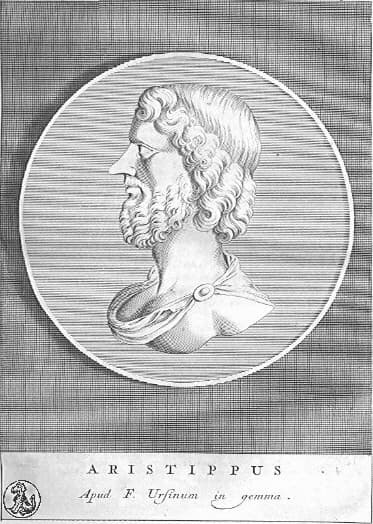
Aristippus of Cyrene
The Socratic who made pleasure the goal — founder of Cyrenaic hedonism.
Overview
A follower of Socrates who drew the opposite conclusion from the Cynics, Aristippus founded the Cyrenaic school and held that the good is pleasure. He prized immediate bodily pleasure, argued that we can know only our own sensations (an early phenomenalism), and taught a worldly art of mastering circumstances — enjoying whatever is present without being enslaved by it. His school was later carried on by his daughter Arete and grandson Aristippus the Younger.
What they supported — and why
Pleasure is the good
SupportedThe aim of life is pleasure, especially immediate, bodily, present pleasure.
WhyEvery creature pursues pleasure and flees pain from birth, so pleasure is the self-evident natural good.
We know only our own sensations
SupportedWe are aware of our own experiences ('I am being sweetened'), not of external things as they are in themselves.
WhySensations are private and certain, while their outer causes are not directly accessible to us.
Mastery, not renunciation
SupportedEnjoy pleasures freely while remaining their master — 'I possess, I am not possessed.'
WhyThe wise adapt to any circumstance and control pleasure rather than fleeing it or being ruled by it.
Causes championed
- Enjoyment of the present
- Adaptability to circumstance
- Self-command amid pleasure
Issues wrestled with
- Is the good pleasure or virtue?
- What can we know beyond our own sensations?
- How does one enjoy without being enslaved?
Hurdles faced
- The charge of shallow hedonism
- Distinguishing refined enjoyment from mere indulgence
Works & books
1 catalogued. Status shows how much survives to today.
Writings (largely lost)
LostVarious works attributed to him did not survive; Cyrenaic doctrine is known through Diogenes Laërtius and later reports.
Read the texts free
Their works online — Open Library catalogues 1 works & editions.
The influence network
See Aristippus of Cyrene in the map →Influenced by
Influenced
In their words
“I possess Laïs, but am not possessed by her.”
— via Diogenes Laërtius
Legacy
He founded the first hedonist school and an early empiricism of sensation — the sharp foil against which Epicurus refined a subtler theory of pleasure.
Further reading
Cross-checked against these authoritative references.