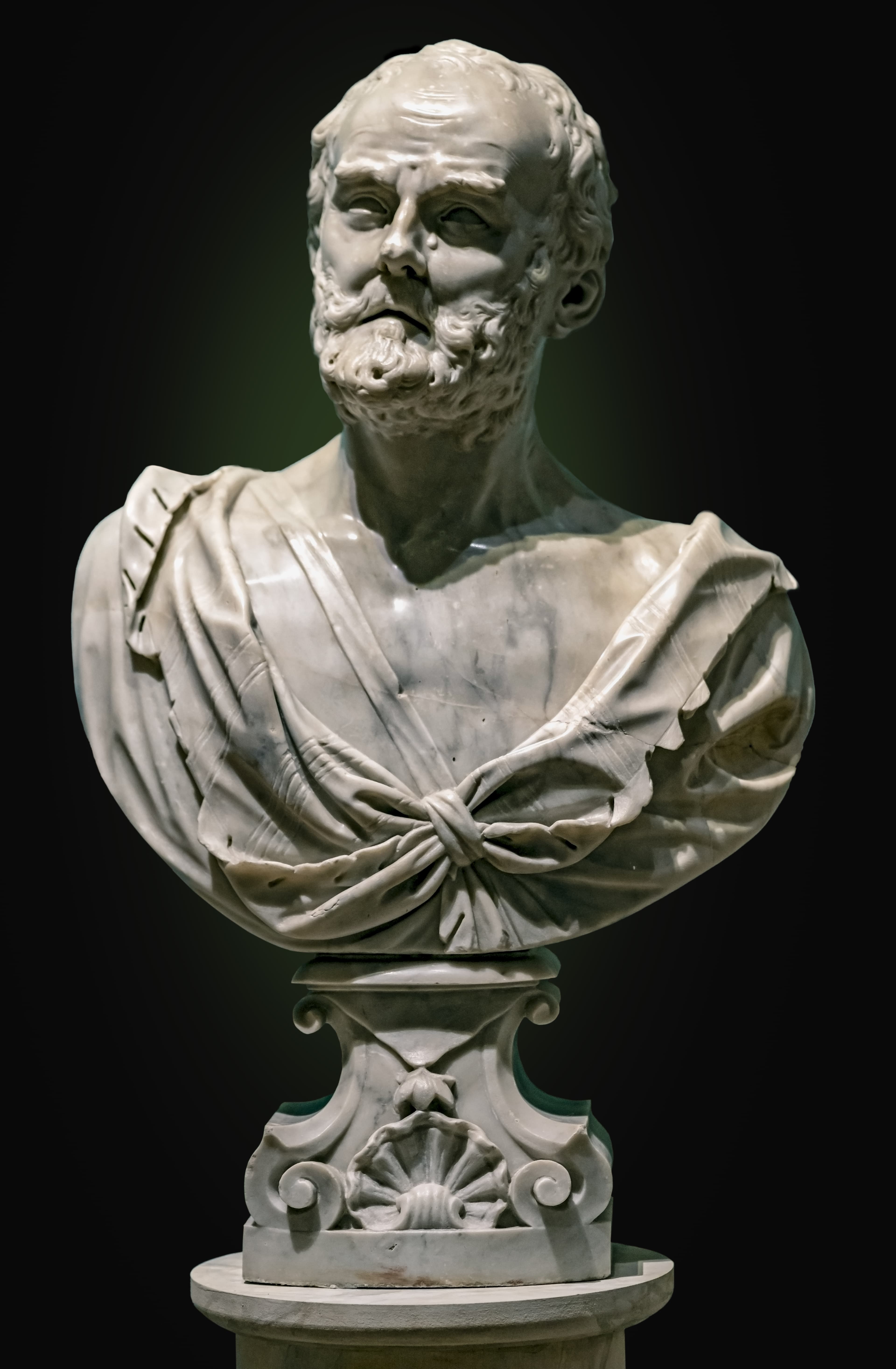
Heraclitus
'Everything flows' — reality is ceaseless change governed by the Logos.
Overview
Nicknamed 'the Obscure' for his riddling aphorisms, Heraclitus taught that the world is in constant flux and that stability is an illusion masking underlying process. Fire is his emblem of reality — always changing yet ordered by measure. Beneath the flux runs the Logos, a rational law or account that unifies opposites: the road up and down are one, strife is justice, and hidden harmony is stronger than the obvious. He held ordinary people asleep to this truth.
What they supported — and why
Universal flux
SupportedAll things are in continual change; you cannot step into the same river twice.
WhyThe apparent stability of objects is really a persistent pattern within ceaseless transformation.
Unity of opposites
SupportedOpposites are interdependent and ultimately one — day/night, war/peace, up/down.
WhyEach opposite defines and requires the other; tension and strife are what hold the world together.
The Logos
SupportedA rational principle orders all change and can be grasped, though most ignore it.
WhyChange is not chaos: it follows measure, and wisdom is understanding this common account.
Causes championed
- Insight over sensory appearance
- Self-examination ('I searched myself')
Issues wrestled with
- How can there be knowledge of a changing world?
- What unites opposites?
- What is the rational order of nature?
Hurdles faced
- Contempt from and for his fellow citizens; a deliberately difficult style
- Only fragments preserved, inviting misreading
Works & books
1 catalogued. Status shows how much survives to today.
On Nature
Fragments onlyA single book, reportedly deposited in the temple of Artemis; survives as ~130 gnomic fragments on flux, the Logos, and opposites.
Read the texts free
Their works online — Open Library catalogues 112 works & editions, 8 of them free to read in full.
The influence network
See Heraclitus in the map →In their words
“Everything flows and nothing stays.”
— via Plato, paraphrasing Heraclitus
“The road up and the road down are one and the same.”
— Fragment (DK B60)
Legacy
His vision of reality as process and his 'unity of opposites' seeded dialectical thinking, Stoic cosmology, and every later philosophy of becoming.
Follow their questions
This thinker is a stop on these paths through philosophy.
Further reading
Cross-checked against these authoritative references.