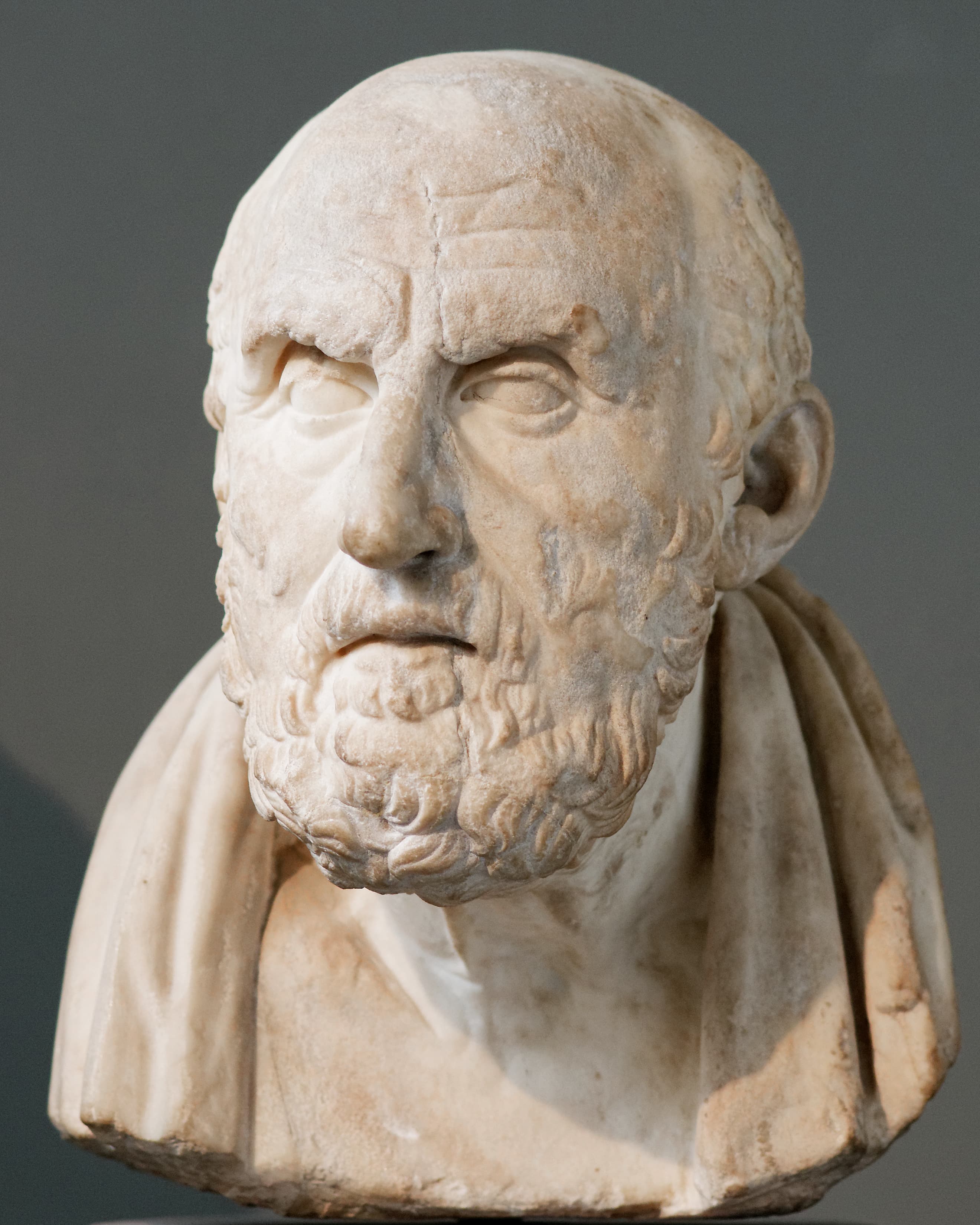
Chrysippus
The 'second founder' of Stoicism who systematized its logic.
Overview
It was said that 'without Chrysippus there would be no Stoa'. The school's third head, he wrote over 700 works (all lost) and gave Stoicism its rigorous systematic form, especially in logic, where he developed propositional logic centuries ahead of its time. He defended Stoic determinism while preserving moral responsibility, articulated the theory of 'fate' and 'assent', and answered the objections of skeptics and rival schools. His logical innovations were so advanced that much was only rediscovered in the 20th century.
What they supported — and why
Propositional logic
SupportedReasoning can be formalized using whole propositions and connectives ('if... then', 'either... or', 'and').
WhyAristotle analyzed terms; Chrysippus saw that inference often turns on relations between complete statements — a deeper logic.
Compatibilist fate
SupportedEverything is fated, yet our assent is genuinely 'up to us', so we remain responsible.
WhyFate works through our own nature and choices; the cylinder rolls because pushed, but rolls as it does because of its own shape.
Assent and impressions
SupportedWe receive impressions but freely give or withhold assent; virtue lies in assenting rightly.
WhySince external impressions are not up to us but our judgement is, the moral life is the disciplined use of assent.
Causes championed
- Logical rigor
- Reconciling determinism with responsibility
- Defending Stoicism against skeptical attack
Issues wrestled with
- How does valid inference work?
- Can we be free if everything is fated?
- What is 'up to us'?
Hurdles faced
- Refuting the powerful skeptics of the Academy
- The near-total loss of his enormous written output
Works & books
3 catalogued. Status shows how much survives to today.
Logical Investigations
Fragments onlyPart of a vast logical corpus; survives only in fragments (some on Herculaneum papyri) and later reports.
On Fate
Fragments onlyHis compatibilist account of determinism and responsibility, known through Cicero and others.
On Providence
LostOn the rational, providential order of the cosmos; not preserved.
Read the texts free
Their works online — Open Library catalogues 3 works & editions.
The influence network
See Chrysippus in the map →Influenced by
Influenced
In their words
“If anyone wants to take a single book of mine, let them; I am only concerned that it be useful.”
— attributed sentiment via Diogenes Laërtius
Legacy
He built the logical and physical backbone of Stoicism and pioneered propositional logic two thousand years before its modern rediscovery.
Follow their questions
This thinker is a stop on these paths through philosophy.
Further reading
Cross-checked against these authoritative references.