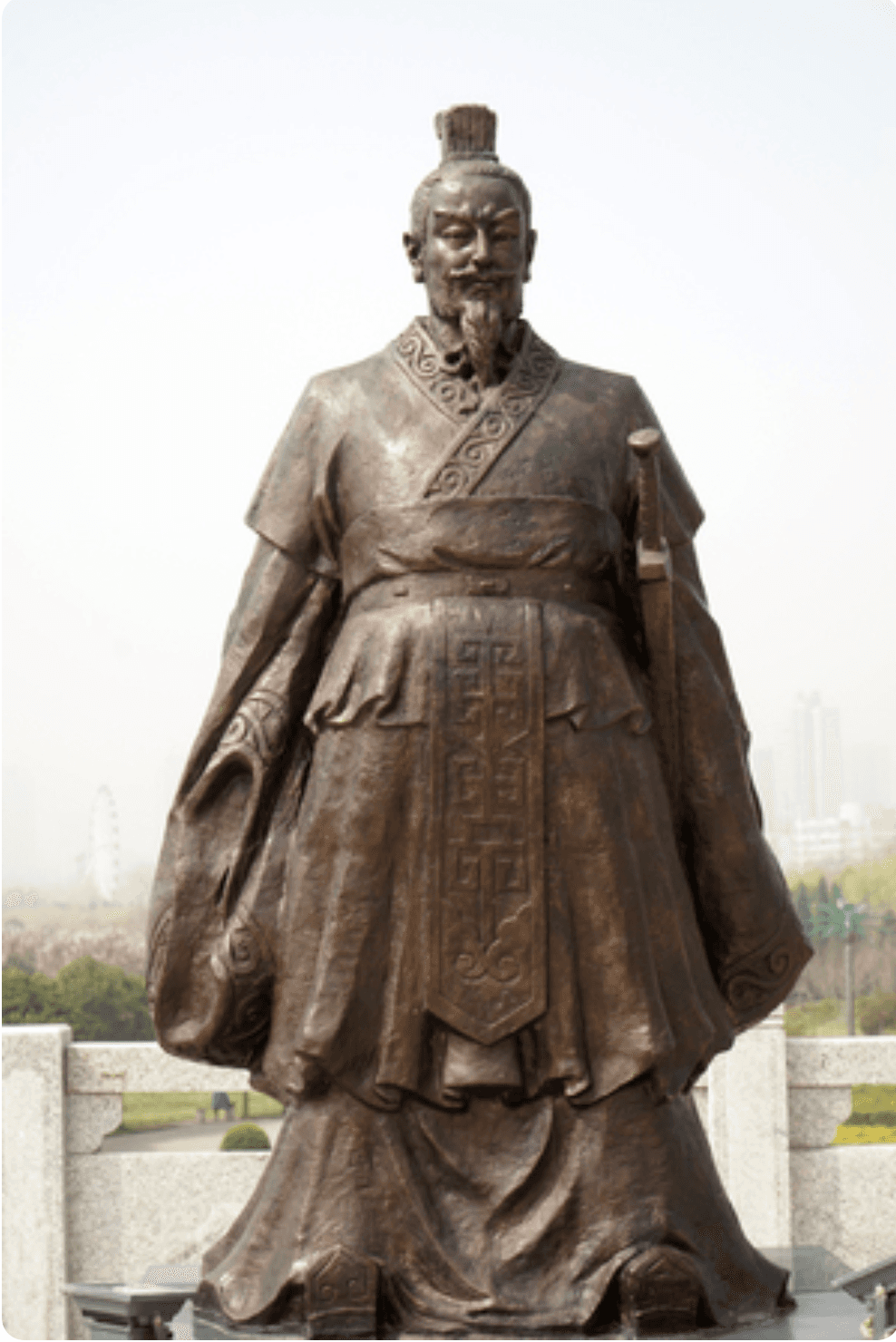
Han Feizi
Han Fei
Master theorist of Legalism — rule by law, method, and power, not virtue.
Overview
The greatest theorist of Legalism (Fajia), who synthesized earlier Legalist ideas into a hard-headed philosophy of statecraft. A student of the Confucian Xunzi, he rejected government by virtue and ritual in favor of clear, strictly enforced laws (fa), administrative technique (shu) for controlling officials, and the ruler's positional power (shi). Assuming people act from self-interest, he argued that a strong state needs firm laws and calibrated rewards and punishments, not moral exhortation. His ideas guided the Qin unification of China; he died forced to take poison in prison.
What they supported — and why
Rule by law (fa)
SupportedGovern through clear, public, uniformly enforced laws with strict rewards and punishments, applied to all regardless of rank.
WhyPeople respond to incentives, not moral appeals; consistent law makes conduct predictable and the state strong, where virtue-based rule is unreliable.
Method (shu) and positional power (shi)
SupportedThe ruler must use administrative techniques to check officials and rely on the authority of his position, not personal charisma.
WhyMinisters pursue their own interests and may deceive the ruler, so hidden methods of control and structural power secure the state better than trust.
A realist view of motivation
SupportedPeople are moved mainly by self-interest — profit and fear — not benevolence.
WhyEven close ties dissolve under interest, so effective government works through incentives and deterrence rather than assuming goodness.
Causes championed
- A strong, orderly state
- The rule of enforced law
- Realistic statecraft
Issues wrestled with
- Should a state rest on virtue or on law and power?
- What moves human behavior?
- How does a ruler control officials?
Hurdles faced
- A stammer that hindered him as a speaker (so he wrote instead)
- Betrayed by his rival Li Si and forced to commit suicide in Qin
Works & books
1 catalogued. Status shows how much survives to today.
The Han Feizi
SurvivesEssays on law, statecraft, and human nature, including an influential commentary on the Dao De Jing.
Read the texts free
Their works online — Open Library catalogues 52 works & editions, 3 of them free to read in full.
The influence network
See Han Feizi in the map →Influenced by
Influenced
In their words
“The enlightened ruler controls his ministers by two handles alone: punishment and reward.”
— Han Feizi
Legacy
His Legalism provided the blueprint for China's first unified empire and remained the hard core of imperial statecraft beneath its Confucian surface.
Follow their questions
This thinker is a stop on these paths through philosophy.
Further reading
Cross-checked against these authoritative references.