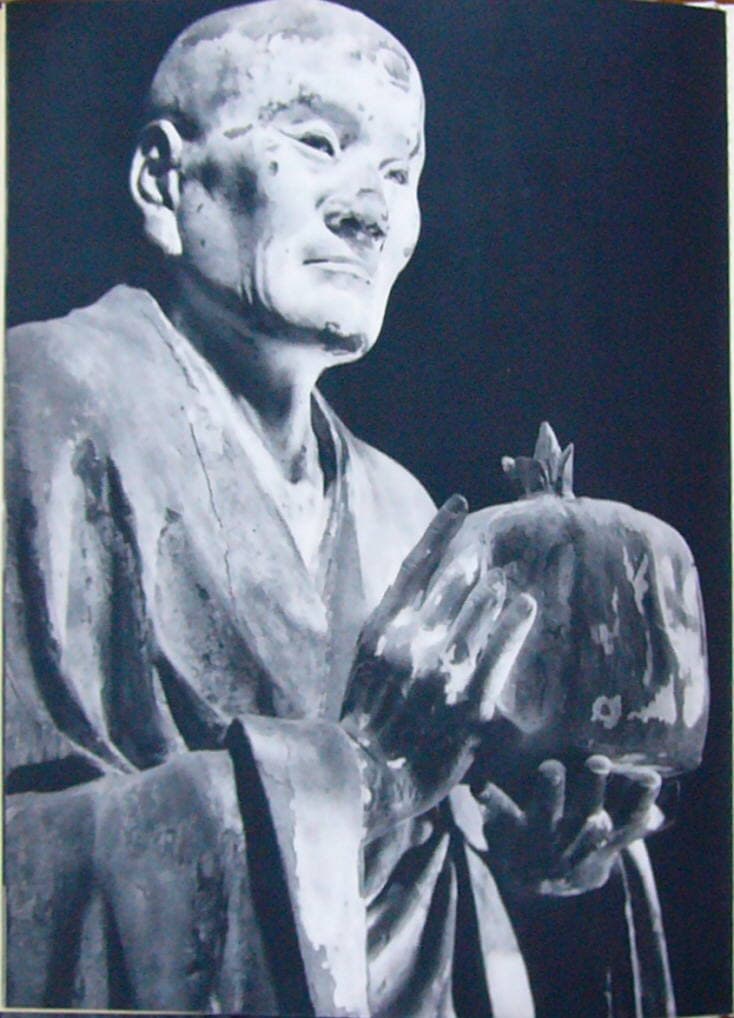
Asaṅga
Founder of Yogācāra Buddhism — the systematic path of 'consciousness-only'.
Overview
The founder of the Yogācāra ('Yoga practice') school of Mahāyāna Buddhism, whose younger half-brother Vasubandhu became its greatest exponent. Asaṅga systematized the 'consciousness-only' analysis of mind and the stages of the bodhisattva path. Tradition says he received his teachings from the future Buddha Maitreya — whether a human teacher or a visionary revelation is debated. His comprehensive works organized Mahāyāna practice and psychology and, through Vasubandhu, shaped Buddhist thought across Asia.
What they supported — and why
Consciousness-only (vijñapti-mātra)
SupportedThe world we experience is a construction of consciousness; the grasped duality of subject and object is unreal.
WhyAnalysis of meditative experience shows the mind projects the objects it takes as external, so liberation requires seeing through that projection.
The stages of the bodhisattva path
SupportedAwakening unfolds through a graded path of practice, insight, and the transformation of consciousness.
WhyA systematic map of the path guides practitioners from ordinary mind to the purified wisdom of a Buddha.
The three natures and the storehouse consciousness
SupportedPhenomena are imagined, dependent, and perfected; a deep 'storehouse consciousness' carries karmic seeds.
WhyThese distinctions explain how illusion arises and how, by purifying the underlying consciousness, awakening becomes possible.
Causes championed
- A systematic Mahāyāna psychology
- The bodhisattva path
- The analysis of consciousness
Issues wrestled with
- Is the external world independent of mind?
- How does the path to awakening unfold?
- How is consciousness structured?
Hurdles faced
- Building a vast systematic corpus
- The disputed nature of his 'teacher' Maitreya
Works & books
2 catalogued. Status shows how much survives to today.
Mahāyānasaṃgraha (Compendium of the Great Vehicle)
SurvivesHis magnum opus — a systematic exposition of Yogācāra doctrine.
Abhidharmasamuccaya; the Yogācārabhūmi (attributed)
PartialA compendium of Mahāyāna Abhidharma and the encyclopedic 'Stages of Yoga Practice' (authorship debated).
Read the texts free
Their works online — Open Library catalogues 27 works & editions.
The influence network
See Asaṅga in the map →Influenced by
Influenced
In their words
“The whole of the graspable and the grasping is only representation.”
— paraphrase of Yogācāra doctrine
Legacy
He founded one of the two great schools of Mahāyāna philosophy; his systematization of mind and the path shaped Buddhist thought from India to East Asia and Tibet.
Further reading
Cross-checked against these authoritative references.