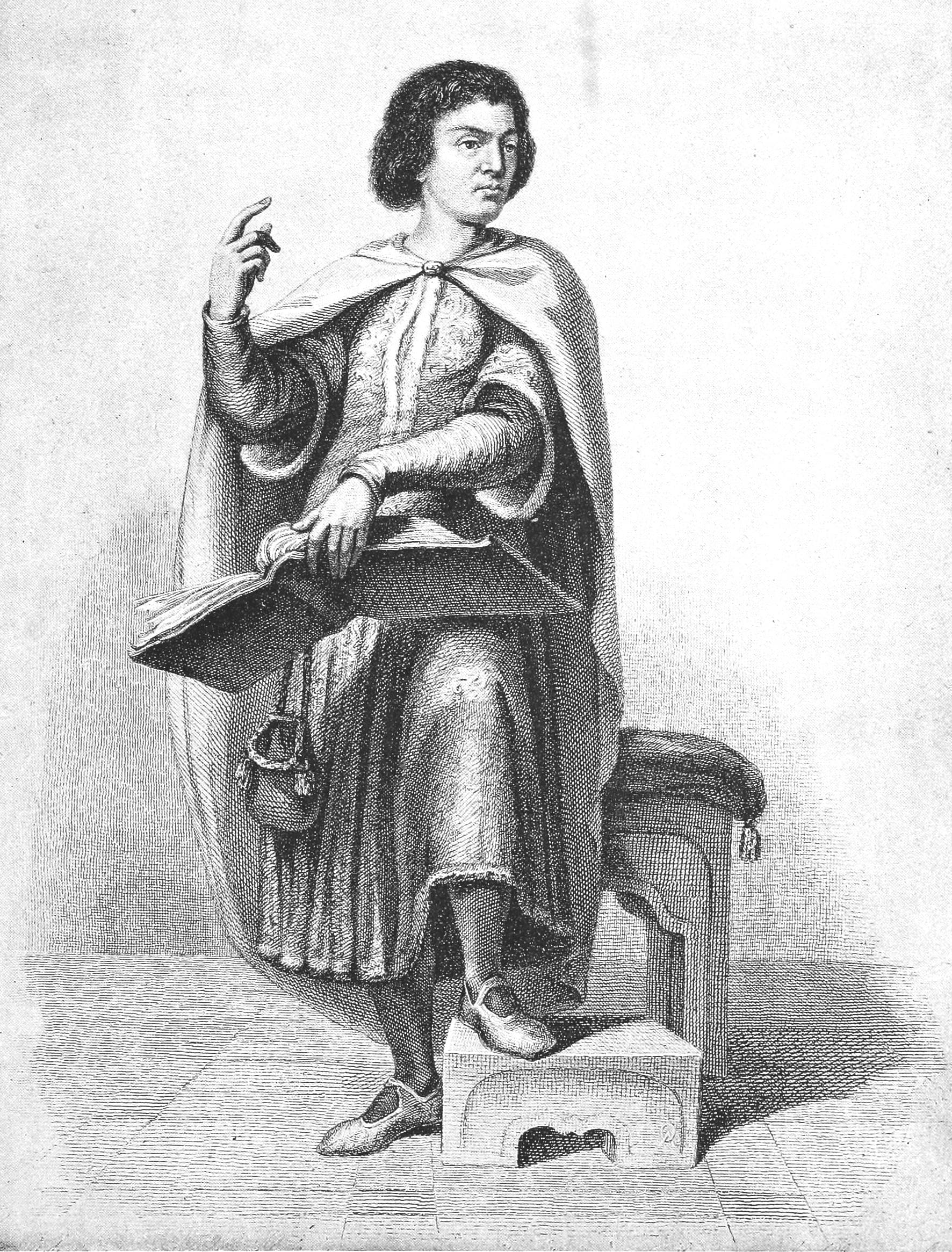
Peter Abelard
Brilliant, combative logician of universals — and the lover of Héloïse.
Overview
The sharpest logician of the twelfth century, Abelard advanced the debate over universals with a subtle 'conceptualism', developed a groundbreaking ethics of intention, and pioneered the dialectical method of setting authorities against one another (Sic et Non). His tragic love affair with his student Héloïse — and its brutal aftermath — made him one of history's most human philosophers, while his restless independence brought repeated condemnations.
What they supported — and why
Conceptualism about universals
SupportedUniversals are neither things nor mere words but concepts — the meaning of general terms, abstracted by the mind from particulars.
WhyOnly individuals exist, yet general words are meaningful, so universality belongs to the mind's concepts, not to separate realities.
An ethics of intention
SupportedThe morality of an act lies in the agent's intention and consent, not in the external deed.
WhyThe same outward act can be sinful or not depending on inner consent, so guilt attaches to the will's assent.
Dialectical method (Sic et Non)
SupportedJuxtapose conflicting authorities systematically to sharpen inquiry through questioning.
Why'By doubting we come to inquiry, and by inquiry we perceive the truth' — apparent contradictions drive understanding.
Causes championed
- Rigorous logic
- Moral interiority
- Questioning as method
Issues wrestled with
- Do universals exist?
- What makes an act right or wrong?
- How to reconcile conflicting authorities?
Hurdles faced
- Castration and disgrace after the affair with Héloïse
- His teaching condemned at Soissons (1121) and Sens (1140)
Works & books
3 catalogued. Status shows how much survives to today.
Sic et Non (Yes and No)
SurvivesA collection of conflicting authorities designed to train dialectical reasoning.
Ethics (Know Thyself)
SurvivesHis ethics of intention and consent.
Glosses on Porphyry; Historia Calamitatum and the letters with Héloïse
SurvivesHis logic of universals and his famous autobiographical account and correspondence.
Read the texts free
3 of Peter Abelard’s works are free to read in full — public-domain English editions on Project Gutenberg, matched from Gutenberg’s own catalogue.
Every edition online — Open Library catalogues 231 works & editions, 28 of them free to read in full.
The influence network
See Peter Abelard in the map →In their words
“By doubting we come to inquiry, and by inquiry we perceive the truth.”
— Sic et Non
Legacy
He made questioning the engine of Scholasticism and gave ethics its focus on inner intention; his love story keeps his humanity vivid.
Further reading
Cross-checked against these authoritative references.