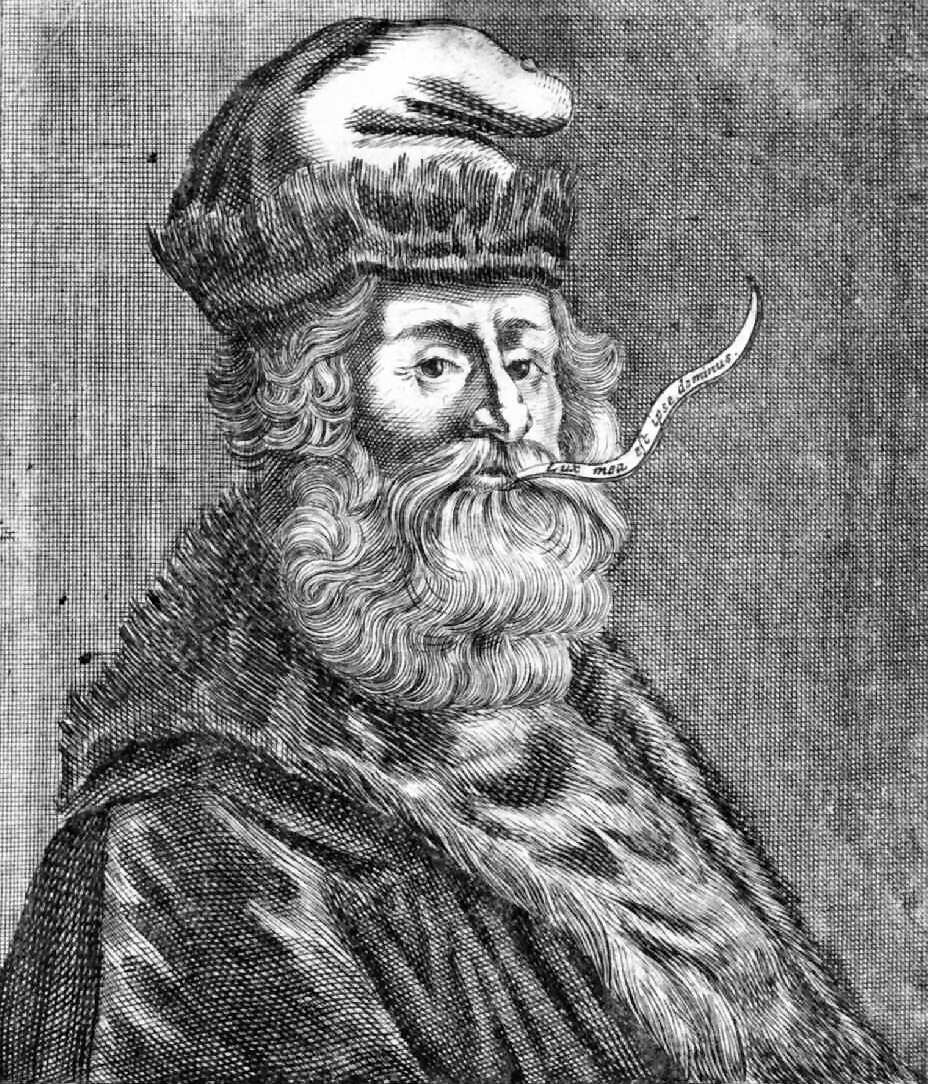
Ramon Llull
Catalan visionary whose 'Art' sought a universal logic to convert the world.
Overview
A Majorcan polymath, mystic, and missionary, Ramon Llull invented the 'Ars' (Great Art) — a combinatorial system of basic concepts arranged on rotating figures, meant to generate and demonstrate all truths and to persuade Muslims and Jews of Christianity by reason common to all. Writing prolifically in Catalan, Latin, and Arabic, he anticipated combinatorial logic and computation. He reportedly died a martyr in North Africa.
What they supported — and why
The combinatorial Art
SupportedA fixed set of divine 'dignities' (goodness, greatness, eternity…) can be systematically combined to demonstrate truths in every field.
WhyIf all reality reflects God's attributes, then combining those attributes methodically can generate and prove knowledge universally.
Reason as the ground of interfaith persuasion
SupportedReligious truth can be shown by arguments acceptable to Muslims, Jews, and Christians alike.
WhySince all three share reason and belief in one God, a common rational method could resolve religious difference.
Contemplation and action united
SupportedPhilosophy serves the love and knowledge of God and the conversion of the world.
WhyFor Llull, understanding is inseparable from loving God and serving that love in mission.
Causes championed
- A universal art of knowledge
- Interfaith dialogue by reason
- Contemplative mission
Issues wrestled with
- Can all truths be generated systematically?
- Can faith be shown by universal reason?
- How do knowledge and love unite?
Hurdles faced
- Rejection of his missionary schemes
- Reportedly stoned in Tunis
- His 'Art' baffled many contemporaries
Works & books
2 catalogued. Status shows how much survives to today.
Ars Magna (Ars Generalis Ultima)
SurvivesHis combinatorial 'Great Art' for generating and demonstrating truths.
Blaquerna; The Book of the Lover and the Beloved
SurvivesA philosophical novel and a classic of mystical devotion.
Read the texts free
2 of Ramon Llull’s works are free to read in full — public-domain English editions on Project Gutenberg, matched from Gutenberg’s own catalogue.
Every edition online — Open Library catalogues 413 works & editions, 40 of them free to read in full.
The influence network
See Ramon Llull in the map →Influenced by
Influenced
In their words
“He who loves not, lives not.”
— The Book of the Lover and the Beloved
Legacy
His combinatorial Art anticipated symbolic logic and computation, and his interfaith vision made him a singular figure of the medieval mind.
Further reading
Cross-checked against these authoritative references.