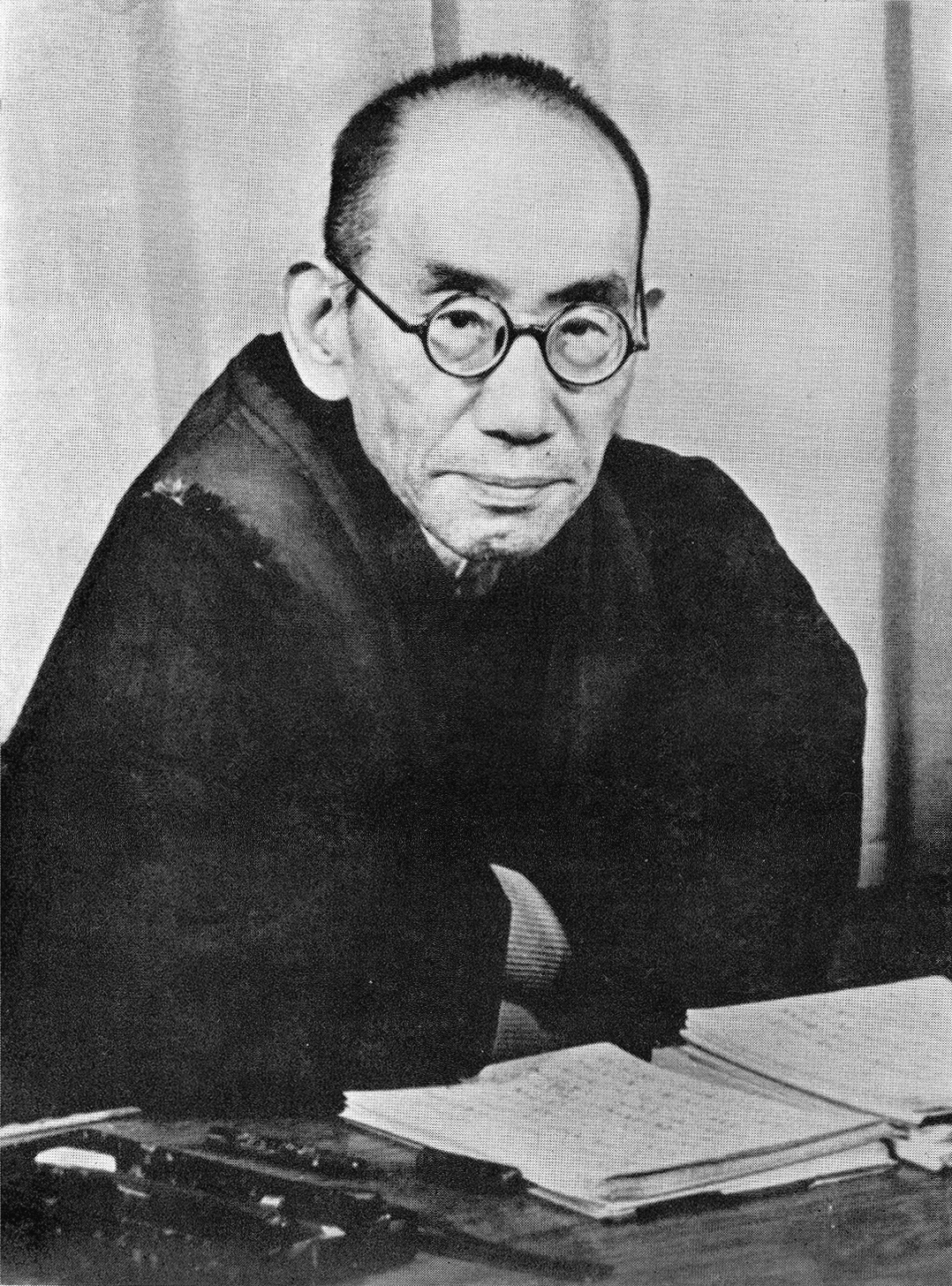
Nishida Kitarō
Founder of the Kyoto School — 'pure experience' and the logic of 'nothingness'.
Overview
The most important modern Japanese philosopher and founder of the Kyoto School, Nishida forged an original synthesis of Western philosophy with East Asian Buddhist and Zen thought. Beginning from 'pure experience' — experience prior to the split of subject and object — he developed a 'logic of place' (basho) grounded in 'absolute nothingness', reworking Western concepts to articulate a distinctively Japanese philosophical vision that remains globally influential.
What they supported — and why
Pure experience
SupportedThe most basic reality is 'pure experience' — immediate experience before it is divided into a knowing subject and a known object.
WhyThe subject–object split that Western philosophy takes as fundamental is a later abstraction from a more primary, undivided experiencing.
The logic of place (basho) and absolute nothingness
SupportedReality is understood through 'place' (basho) — the field in which things arise — ultimately grounded in an 'absolute nothingness' rather than a substance or being.
WhyDrawing on Buddhist thought, he holds that what lets all things be is not a further being but a formless 'nothingness' that embraces and negates every determination.
East–West synthesis
SupportedWestern logic and philosophy can be reworked through East Asian (especially Zen Buddhist) insight into a new, universal philosophy.
WhyNeither tradition alone is complete; bringing them together can express what each leaves unsaid, from a Japanese standpoint.
Causes championed
- A genuinely Japanese philosophy in dialogue with the West
- The priority of undivided experience
- A metaphysics of nothingness
Issues wrestled with
- What is the most basic reality?
- How do subject and object arise?
- Can East and West be philosophically united?
Hurdles faced
- Creating modern philosophy in Japanese, coining new vocabulary
- The political entanglements of the Kyoto School in wartime Japan
Works & books
2 catalogued. Status shows how much survives to today.
An Inquiry into the Good
SurvivesHis first and most famous work, developing 'pure experience'.
From the Acting to the Seeing; later essays on basho
SurvivesHis mature 'logic of place' and philosophy of absolute nothingness.
Read the texts free
Their works online — Open Library catalogues 107 works & editions, 8 of them free to read in full.
The influence network
See Nishida Kitarō in the map →Influenced by
Influenced
In their words
“Over the true self, subject and object are one.”
— An Inquiry into the Good (paraphrase)
Legacy
He founded modern Japanese philosophy and the Kyoto School, showing that world philosophy could be done from a non-Western center.
Further reading
Cross-checked against these authoritative references.