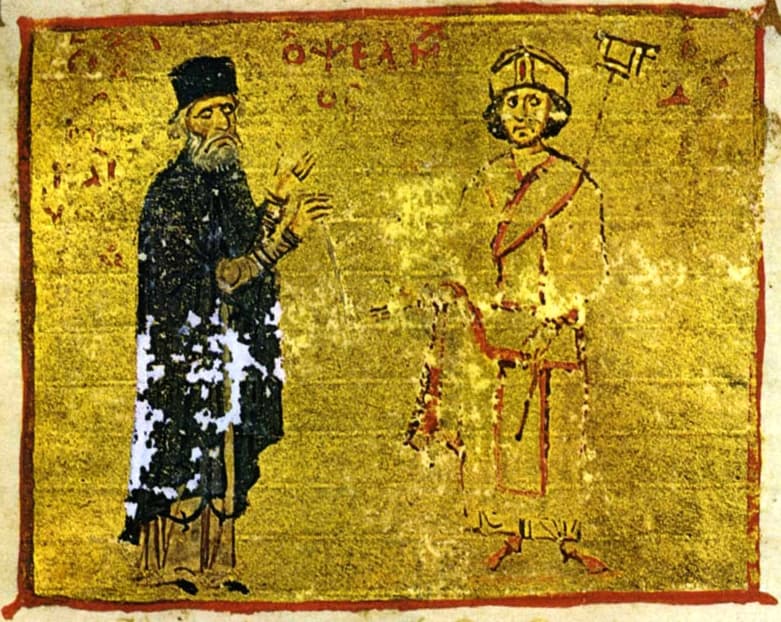
Michael Psellos
Revived Platonism in Byzantium and put philosophy back at the center of learning.
Overview
A brilliant Byzantine statesman, historian, and polymath, Michael Psellos led an eleventh-century revival of secular philosophy — especially Platonism and Neoplatonism — within the Christian empire. As court advisor and 'consul of the philosophers', he championed the study of ancient Greek thought (Plato, Proclus) alongside Christianity, wrote on an encyclopedic range of subjects, and left a vivid history of the emperors he served (the Chronographia).
What they supported — and why
The revival of Platonic philosophy
SupportedAncient Greek philosophy, especially Plato and the Neoplatonists, is a treasure to be studied and harmonized with Christian faith.
WhyThe wisdom of the Hellenes contains genuine truth and should not be lost, provided it is guided by orthodoxy.
Reason within faith
SupportedRational, philosophical inquiry has real value alongside revelation and should be cultivated.
WhyUnderstanding deepens faith, and the mind's pursuit of truth honors the God who gave it.
Encyclopedic learning
SupportedThe educated person should master the whole range of the sciences and letters.
WhyAll knowledge is worth pursuing, and breadth of learning serves both the state and the soul.
Causes championed
- The revival of Greek philosophy
- Secular learning within Christianity
- The life of the mind at court
Issues wrestled with
- What value has pagan philosophy for Christians?
- How do reason and faith relate?
- What should one learn?
Hurdles faced
- Suspicion of his enthusiasm for pagan Neoplatonism (he had to profess orthodoxy)
- The perils of imperial court politics
Works & books
2 catalogued. Status shows how much survives to today.
Chronographia
SurvivesA vivid, psychologically acute history of the Byzantine emperors he served.
De Omnifaria Doctrina; philosophical and scientific treatises
SurvivesEncyclopedic works transmitting and reviving Greek learning.
Read the texts free
Their works online — Open Library catalogues 74 works & editions, 5 of them free to read in full.
The influence network
See Michael Psellos in the map →In their words
“I found philosophy in a poor state and revived it myself.”
— paraphrase of the Chronographia
Legacy
He reignited the study of Greek philosophy in Byzantium, helping preserve and transmit the classical heritage toward the Renaissance.
Further reading
Cross-checked against these authoritative references.