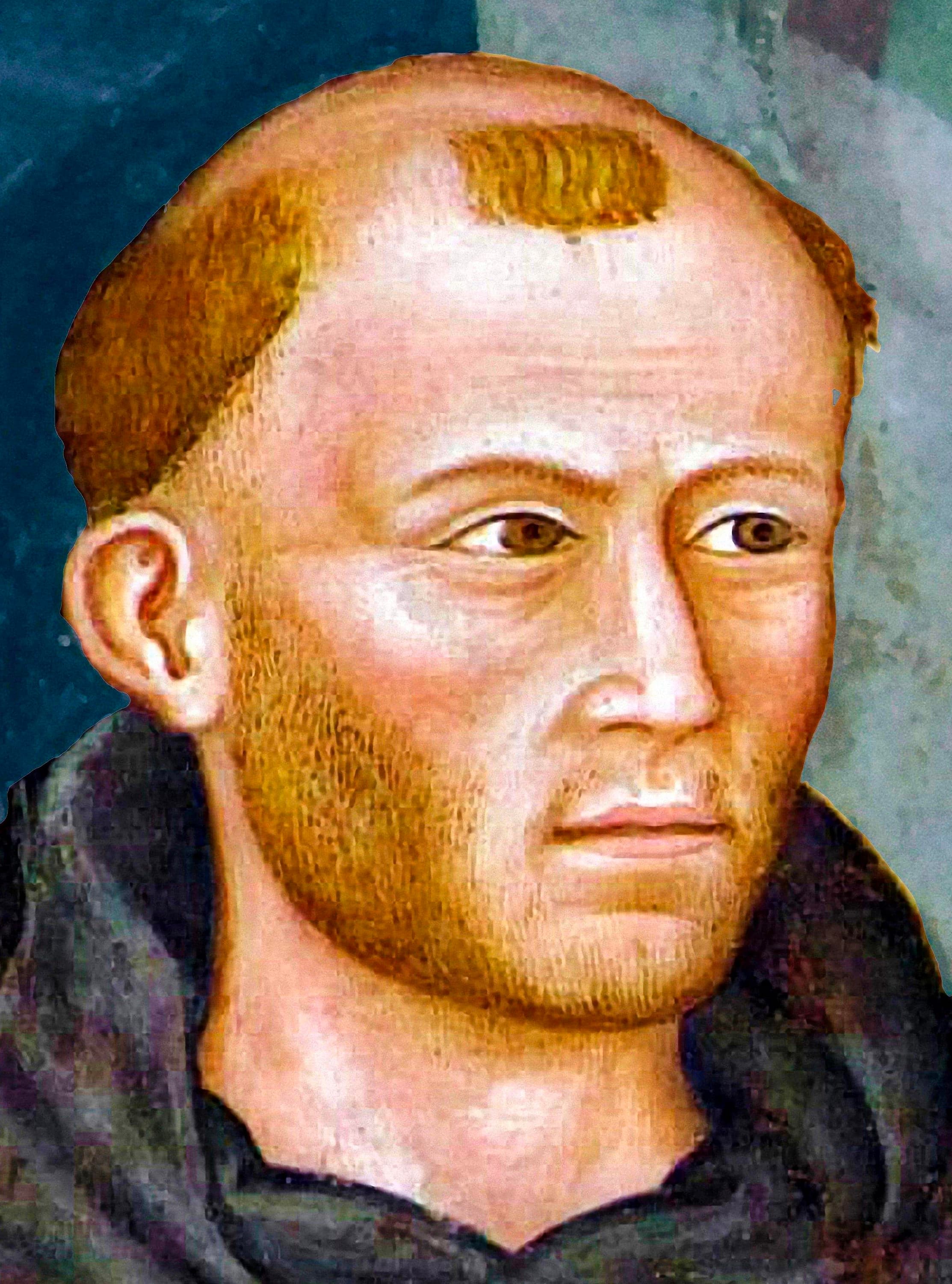
Meister Eckhart
Dominican mystic of the soul's 'divine spark' and detachment — union with God within.
Overview
A Dominican theologian and preacher, Eckhart fused scholastic learning with a bold speculative mysticism, much of it delivered in vivid German sermons. He taught that there is an uncreated 'ground' or 'spark' in the soul where it is one with God, that the way to God is 'detachment' (Gelassenheit) — releasing self and things — and that the soul must let God be born within it. His daring paradoxes led to a posthumous condemnation, yet his influence on Western mysticism and philosophy runs deep.
What they supported — and why
The ground / spark of the soul
SupportedIn the soul's innermost ground there is something uncreated and divine, where soul and God are one.
WhyThe deepest self is where God dwells and acts, so union with God is found by turning to this inmost ground.
Detachment (Gelassenheit)
SupportedRelease attachment to self, to things, and even to images of God, to make room for God.
WhyOnly an empty, detached soul can receive God fully; grasping and self-will block the divine.
The birth of God in the soul
SupportedGod is eternally born in the detached soul, which is thereby united with the divine.
WhyThe soul's purpose is to become the place where the Word is born, uniting it with God's own life.
Causes championed
- Mystical union with God
- Inner detachment
- The primacy of the soul's ground
Issues wrestled with
- How is the soul united with God?
- What must be released to find God?
- Where is God encountered?
Hurdles faced
- Charges of heresy over his paradoxical language
- A posthumous papal condemnation of several propositions (1329)
Works & books
2 catalogued. Status shows how much survives to today.
German Sermons
SurvivesHis vivid vernacular preaching on detachment, the soul's ground, and union with God.
Opus Tripartitum; On Detachment; The Book of Divine Consolation
PartialHis Latin systematic works and treatises of spiritual counsel.
Read the texts free
Their works online — Open Library catalogues 252 works & editions, 6 of them free to read in full.
The influence network
See Meister Eckhart in the map →Influenced
In their words
“The eye with which I see God is the same eye with which God sees me.”
— Sermons
“God is at home; it is we who have gone out for a walk.”
— attributed
Legacy
The deepest of the Christian mystics, his vision of the soul's divine ground shaped centuries of mysticism and speculative philosophy.
Further reading
Cross-checked against these authoritative references.