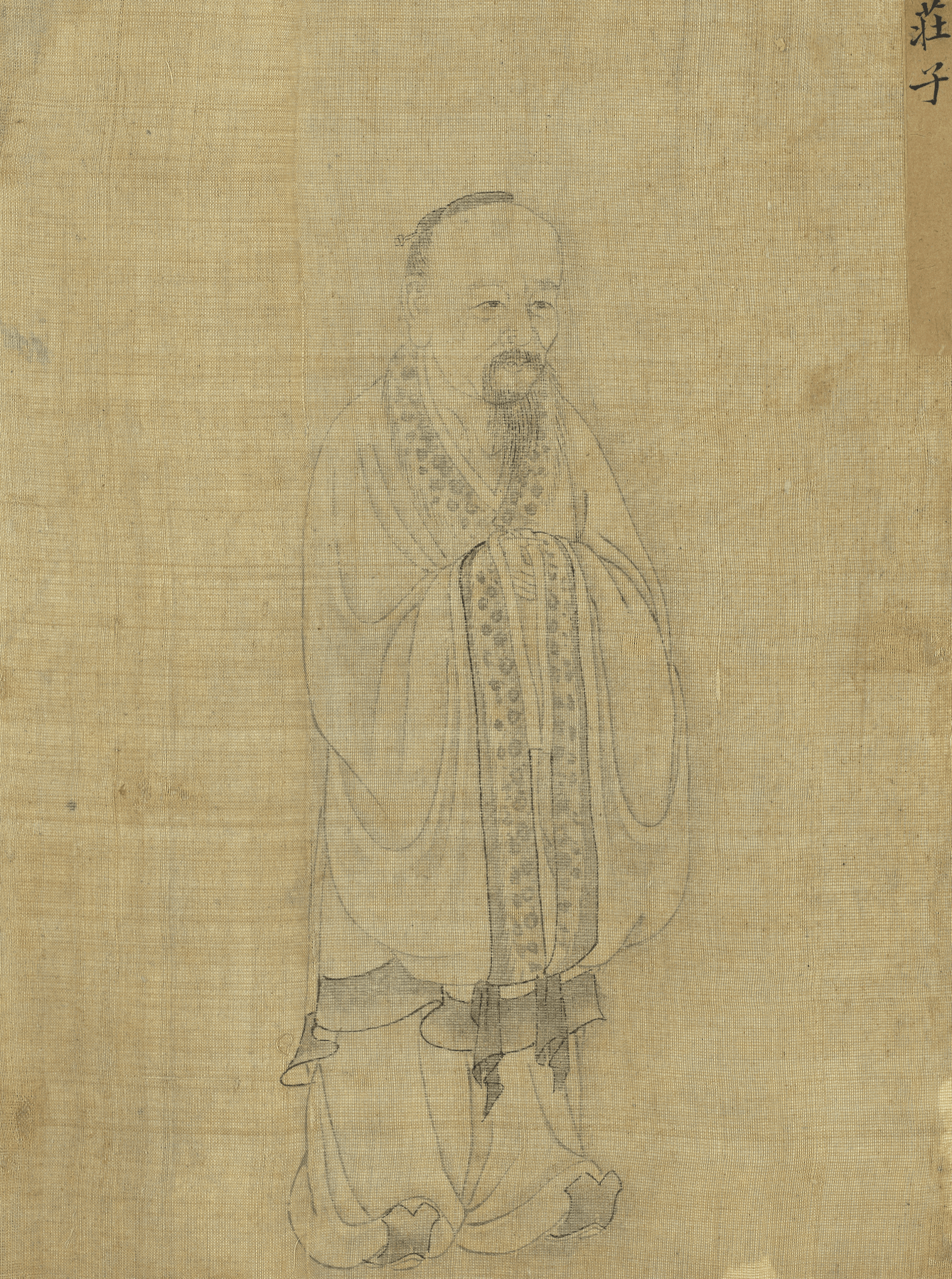
Zhuangzi
Zhuang Zhou
Daoist master of spontaneity, relativity, and the freedom of the open mind.
Overview
The greatest literary and philosophical voice of Daoism, whose brilliant, humorous, paradoxical writings (the Zhuangzi) explore freedom, spontaneity, and the relativity of all viewpoints. Where Laozi is gnomic, Zhuangzi is playful and profound: through parables — the butterfly dream, the useless tree, the skilled butcher — he undermines fixed distinctions, mocks the pursuit of fame and rigid morality, and celebrates the sage who wanders free by according with the Dao and accepting transformation, including death.
What they supported — and why
The relativity of viewpoints
SupportedJudgements of right/wrong, big/small, useful/useless are perspective-bound, not absolute.
WhyEach standpoint sees differently — what is 'useful' to one is useless to another — so fixed distinctions are partial; the sage sees from the 'axis of the Dao' beyond them.
Spontaneity and effortless skill
SupportedAct with natural spontaneity, like the butcher whose blade glides through the ox by following its natural structure.
WhyForcing and over-deliberating obstruct; attuning to the natural pattern brings effortless mastery and freedom.
Freedom through acceptance
SupportedThe sage is liberated by releasing fixed self, ambition, and fear — even accepting death as part of transformation.
WhyClinging to self, gain, and life breeds anxiety; going along with the ceaseless transformation of things brings equanimity and 'free and easy wandering'.
Causes championed
- Freedom of mind
- Spontaneity
- Skepticism of fixed distinctions
- Acceptance of nature and change
Issues wrestled with
- Are our judgements absolute or relative?
- How does one live freely?
- How should we face death?
Hurdles faced
- Resisting the era's obsession with power and fame
- Conveying the ineffable through paradox and story
Works & books
1 catalogued. Status shows how much survives to today.
The Zhuangzi
SurvivesA masterwork of parable and argument; the 'Inner Chapters' are considered his, the rest by his followers.
Read the texts free
Their works online — Open Library catalogues 231 works & editions, 5 of them free to read in full.
The influence network
See Zhuangzi in the map →Influenced by
Influenced
In their words
“Now I do not know whether I was then a man dreaming I was a butterfly, or whether I am now a butterfly dreaming I am a man.”
— Zhuangzi
Legacy
His celebration of spontaneity, perspective, and freedom is a summit of world literature and philosophy, and shaped Chan/Zen and East Asian aesthetics.
Further reading
Cross-checked against these authoritative references.