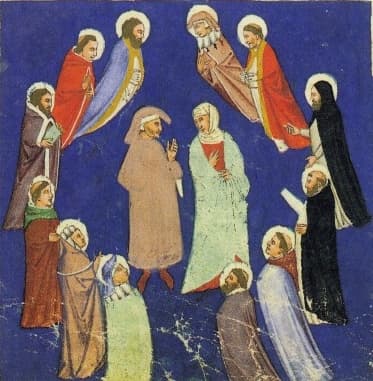
Siger of Brabant
Radical Aristotelian ('Latin Averroist') whose theses provoked the 1277 Condemnation.
Overview
A master of arts at Paris and the leading 'Latin Averroist', Siger pushed Aristotle — read through Averroes — to conclusions in tension with Christian doctrine: the eternity of the world, the unity of the intellect for all humans, and determinism. His teaching helped provoke the great Condemnation of 1277. Whether he truly held a 'double truth' (that philosophy and faith could contradict) is debated; Dante placed him, strikingly, among the wise in Paradise.
What they supported — and why
The eternity of the world
SupportedFollowing Aristotle, the world has no temporal beginning.
WhyAristotle's arguments from motion and time imply an eternal cosmos, and philosophy must follow its own reasoning where it leads.
The unity of the intellect
SupportedThere is one separate intellect by which all human beings think.
WhyAverroes' reading of Aristotle's De Anima concludes that the immaterial intellect cannot be individually multiplied among persons.
The autonomy of philosophy
SupportedPhilosophical reasoning must reach its own conclusions even where they seem to conflict with faith.
WhyThe philosopher qua philosopher reports what reason demonstrates, leaving the truth of faith to theology.
Causes championed
- The integrity of Aristotelian reasoning
- The autonomy of philosophy from theology
Issues wrestled with
- Is the world eternal?
- Is the intellect one or many?
- Can reason and faith conflict?
Hurdles faced
- Condemnation of his theses in 1270 and 1277
- Summoned to the Inquisition; died in exile at the papal court
Works & books
1 catalogued. Status shows how much survives to today.
On the Eternity of the World; On the Intellective Soul
PartialHis controversial treatises on the eternity of the cosmos and the shared intellect.
Read the texts free
Their works online — Open Library catalogues 27 works & editions, 3 of them free to read in full.
The influence network
See Siger of Brabant in the map →In their words
“The philosopher determines what reason concludes, not what is true according to faith.”
— paraphrase of his method
Legacy
He forced Christendom to confront the tension between Aristotelian reason and faith, provoking the 1277 Condemnation that reshaped late Scholasticism.
Further reading
Cross-checked against these authoritative references.