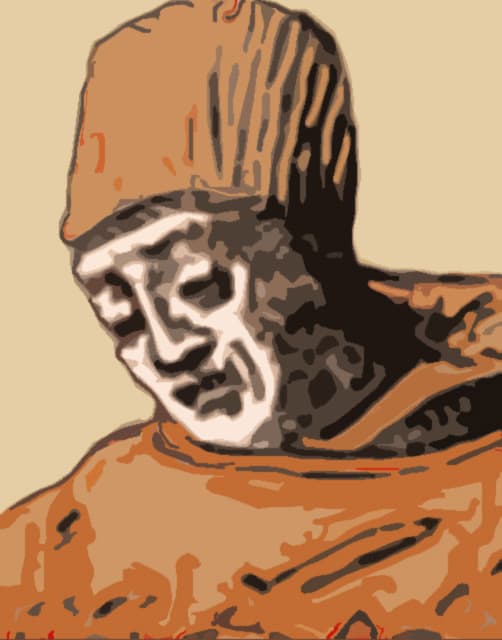
Marsilius of Padua
Argued that political authority rises from the people — a radical medieval secularism.
Overview
An Italian scholar and physician, Marsilius wrote the Defensor Pacis (Defender of the Peace), one of the most radical political works of the Middle Ages. Drawing on Aristotle, he argued that all coercive authority derives from the people (the 'weightier part' of the citizens), that law is the command of the whole community, and that the Church has no coercive or temporal power and must be subordinate to civil government. Condemned as a heretic, he took refuge with Emperor Louis of Bavaria.
What they supported — and why
Popular sovereignty
SupportedThe source of all legitimate political authority is the people — the whole body of citizens, or its weightier part.
WhyThe community that must obey the law is its proper author, so authority rises from below, not from above.
Law as the community's will
SupportedLaw is the command of the whole people for the common good, not the dictate of a ruler or priest.
WhyOnly what the community wills for its own good carries genuinely binding authority.
The Church subordinate to civil power
SupportedThe Church has no coercive jurisdiction; clergy are subject to civil law, and spiritual and temporal power must not be confused.
WhyCoercive power belongs to the political community alone, so priestly claims to temporal authority are usurpations that breed conflict.
Causes championed
- Popular sovereignty
- The unity of civil authority
- The separation of the Church from coercive power
Issues wrestled with
- Where does political authority come from?
- What is law?
- Should the Church hold temporal power?
Hurdles faced
- Excommunicated and condemned as a heretic
- Forced into exile under imperial protection
Works & books
1 catalogued. Status shows how much survives to today.
Defensor Pacis (The Defender of the Peace)
SurvivesHis radical treatise deriving all political authority from the people and denying the Church coercive power.
The influence network
See Marsilius of Padua in the map →Influenced by
Influenced
In their words
“The legislator is the people, or the whole body of citizens, or the weightier part thereof.”
— Defensor Pacis
Legacy
His defense of popular sovereignty and secular authority made him a startling forerunner of modern political thought.
Further reading
Cross-checked against these authoritative references.