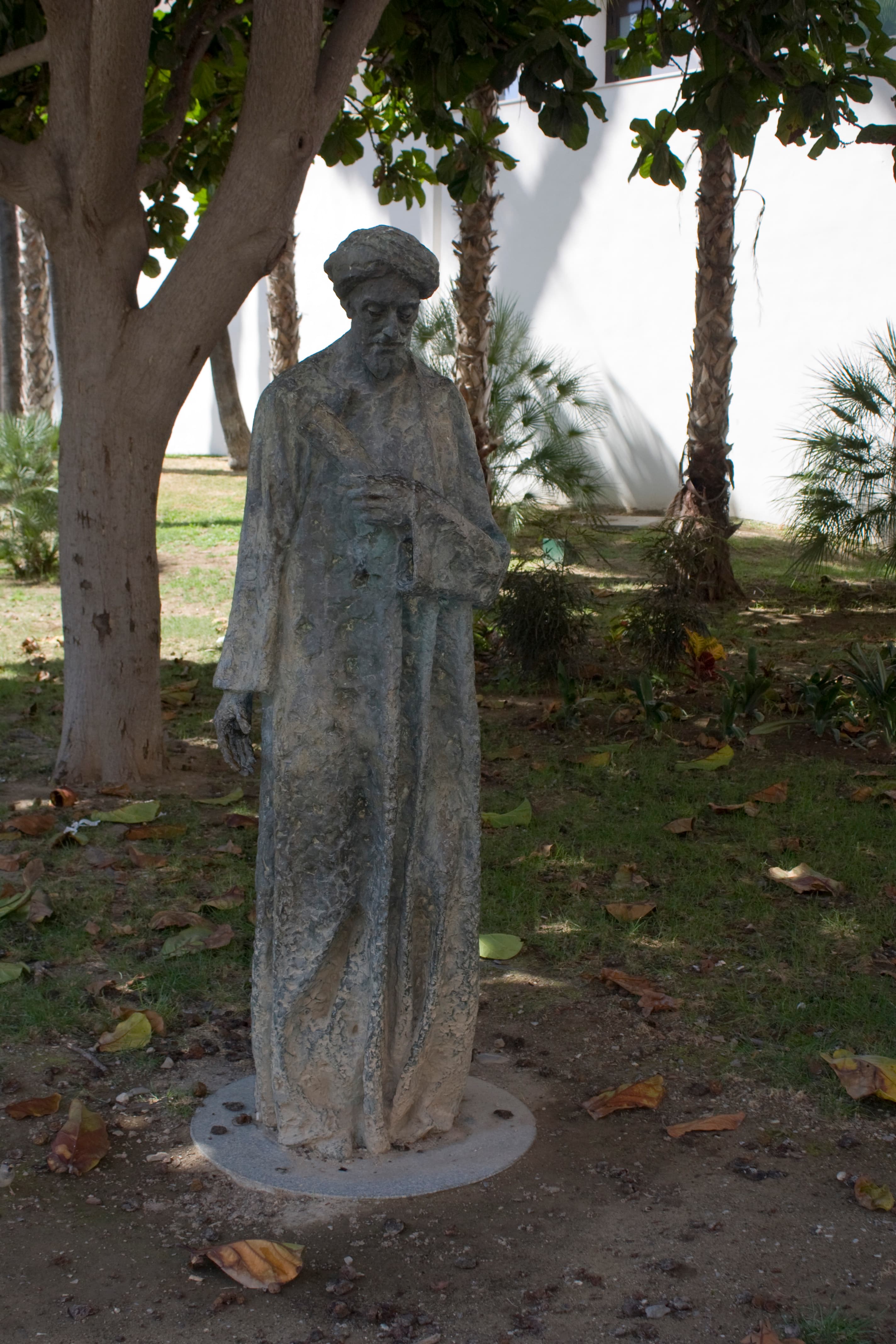
Solomon ibn Gabirol
Shelomo ibn Gabirol (Latin: Avicebron)
Andalusian poet-philosopher whose Neoplatonism reached the Latins as 'Avicebron'.
Overview
A celebrated Hebrew poet and Neoplatonic philosopher of Muslim Spain, Ibn Gabirol wrote the Fountain of Life (Fons Vitae), a dialogue on the emanation of all things from God through universal matter and form. Written without reference to specifically Jewish sources, it was translated into Latin and — its author known only as 'Avicebron' — was long thought to be a Muslim or Christian. His doctrine of 'universal hylomorphism' influenced the Latin scholastics, especially the Franciscans.
What they supported — and why
Universal hylomorphism
SupportedEverything except God, including spiritual beings like angels and souls, is composed of matter and form.
WhyOnly God is absolutely simple, so all else must be composite — even immaterial creatures have a 'spiritual matter' underlying their form.
Emanation through the divine Will
SupportedAll things flow from God through his Will and a first universal matter and form.
WhyThe Will bridges the utterly transcendent God and creation, initiating the emanation of the graded cosmos.
The ascent of the soul
SupportedThe soul's purpose is to know and return toward its divine source.
WhyUnderstanding the structure of being frees the soul from matter and unites it with the source of life.
Causes championed
- A Neoplatonic metaphysics
- The soul's ascent to God
- Philosophy pursued by reason alone
Issues wrestled with
- What are creatures composed of?
- How do all things come from God?
- What is the soul's goal?
Hurdles faced
- A short, reportedly bitter and lonely life
- His identity and religion lost to Latin readers for centuries
Works & books
2 catalogued. Status shows how much survives to today.
The Fountain of Life
SurvivesHis Neoplatonic dialogue on matter, form, and emanation (preserved chiefly in Latin).
Keter Malkut (Royal Crown); The Improvement of the Moral Qualities
SurvivesA great liturgical poem and an ethical treatise.
Read the texts free
Their works online — Open Library catalogues 16 works & editions, 1 of them free to read in full.
The influence network
See Solomon ibn Gabirol in the map →Influenced
In their words
“The soul was created to attain to the knowledge of the world of the divine.”
— Fons Vitae (paraphrase)
Legacy
A bridge between Neoplatonism and both Jewish and Christian thought, his 'Avicebron' shaped Franciscan metaphysics while his Hebrew poetry endures in the liturgy.
Further reading
Cross-checked against these authoritative references.