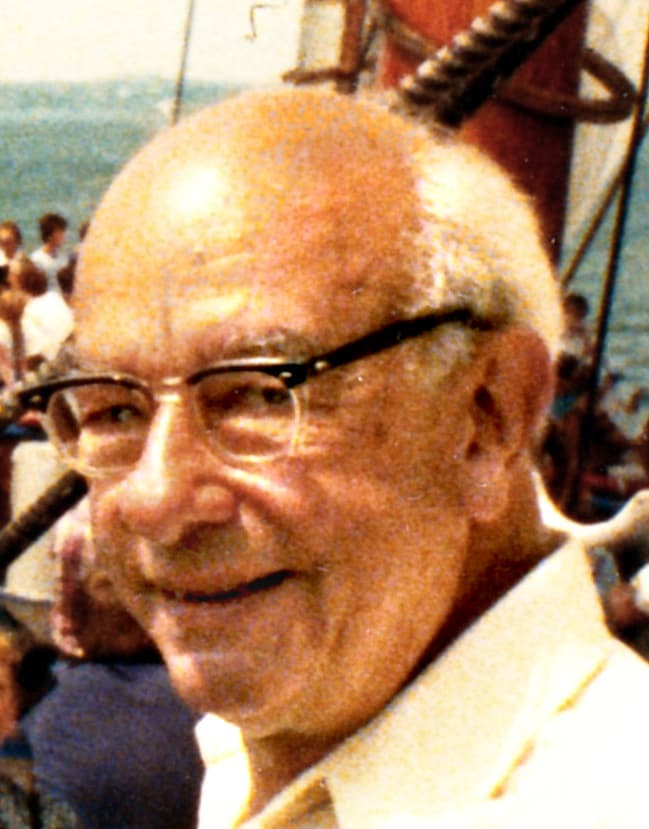
W. V. O. Quine
Analytic naturalist — no dogma of analytic truth, and knowledge as one web of belief.
Overview
The most influential American analytic philosopher of the mid-20th century, Quine dismantled central dogmas of logical positivism and reoriented philosophy toward science. He denied a sharp line between 'analytic' truths (true by meaning) and 'synthetic' truths (true by fact), argued that our beliefs face experience as one interconnected 'web', and held that epistemology should become part of natural science. His theses on the indeterminacy of translation and ontological commitment reshaped debates about meaning and existence.
What they supported — and why
The rejection of the analytic–synthetic distinction
SupportedThere is no clear, principled line between truths held by meaning alone and truths held by fact; the notion of analyticity cannot be made precise.
WhyEvery attempt to define 'analytic' relies on equally obscure notions like synonymy, so the supposed distinction collapses under analysis.
Confirmation holism (the web of belief)
SupportedStatements are not tested one by one; our beliefs face the 'tribunal of experience' only as a connected whole, and any belief can be revised.
WhySince a prediction depends on many assumptions at once, a failed experiment does not pinpoint one culprit, so revision can happen anywhere in the web.
Naturalized epistemology and ontological commitment
SupportedEpistemology should be pursued as part of empirical psychology; and 'to be is to be the value of a bound variable' — our theories' quantifiers reveal what we take to exist.
WhyThere is no first philosophy above science, so knowledge is studied scientifically, and what a well-confirmed theory must quantify over is what we are committed to.
Causes championed
- A scientific, naturalistic philosophy
- Rigor about meaning and existence
- Continuity of philosophy with science
Issues wrestled with
- Is there a line between meaning and fact?
- How are beliefs tested?
- What exists, and how do we know?
Hurdles faced
- Overturning the reigning logical-positivist orthodoxy he grew up in
- The unsettling relativity his holism and indeterminacy seemed to imply
Works & books
2 catalogued. Status shows how much survives to today.
'Two Dogmas of Empiricism'
SurvivesHis landmark attack on the analytic–synthetic distinction and reductionism.
Word and Object
SurvivesHis theory of language, translation, and ontology (the indeterminacy of translation).
Read the texts free
Their works online — Open Library catalogues 162 works & editions.
The influence network
See W. V. O. Quine in the map →In their words
“To be is to be the value of a bound variable.”
— 'On What There Is'
Legacy
He reshaped analytic philosophy by erasing its founding dogmas and binding it to natural science, setting the agenda for decades.
Follow their questions
This thinker is a stop on these paths through philosophy.
Further reading
Cross-checked against these authoritative references.