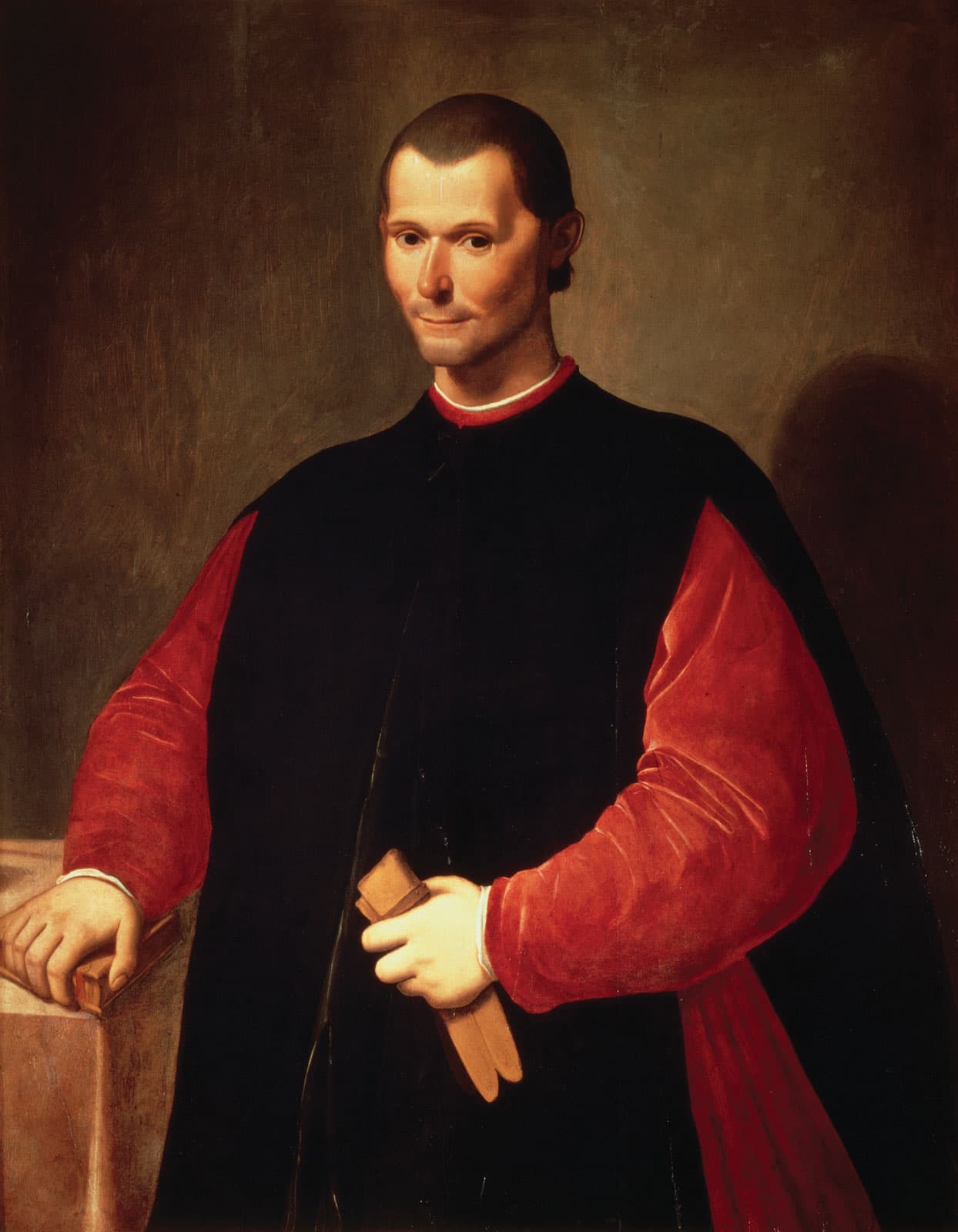
Niccolò Machiavelli
Founder of modern political realism — how power is actually won and kept.
Overview
A Florentine diplomat and political theorist, Machiavelli broke with the tradition of idealized 'mirror for princes' writing to analyze politics as it really is. In The Prince he studied how rulers actually gain, hold, and lose power, arguing that a leader must be prepared to act against conventional morality when necessity demands. His clear-eyed separation of political effectiveness from moral idealism founded modern political science and made 'Machiavellian' a byword — often unfairly, since his Discourses reveal a committed republican.
What they supported — and why
The 'effectual truth' over ideals
SupportedStudy how people and states actually behave, not how they ought to; a ruler who acts only as morality prescribes will be destroyed among those who do not.
WhyPolitical survival is decided by real forces, so guidance must be based on the effectual truth, not on imagined republics.
Virtù and fortuna
SupportedThe able leader combines skill, boldness, and adaptability (virtù) to master the changing tides of fortune (fortuna).
WhyFortune governs perhaps half of affairs; the decisive, flexible leader can seize the other half rather than be swept along.
Ends, appearances, and necessity
SupportedA ruler should keep faith and mercy when possible, but must be willing to deceive and use force when the state's survival requires, while appearing virtuous.
WhySince people judge by appearances and results, and politics is dangerous, effectiveness sometimes demands what private morality forbids.
Causes championed
- A realistic science of politics
- The stability and survival of the state
- (in the Discourses) republican liberty
Issues wrestled with
- How is political power really won and kept?
- How do morality and politics relate?
- How much is governed by fortune?
Hurdles faced
- The fall of the Florentine republic; he was dismissed, imprisoned, and tortured
- His name became a synonym for cynical scheming, obscuring his republicanism
Works & books
2 catalogued. Status shows how much survives to today.
The Prince
SurvivesHis famous analysis of how rulers acquire and maintain power.
Discourses on Livy
SurvivesHis longer, republican work on liberty, law, and the Roman republic.
Read the texts free
4 of Niccolò Machiavelli’s works are free to read in full — public-domain English editions on Project Gutenberg, matched from Gutenberg’s own catalogue.
Every edition online — Open Library catalogues 1,040 works & editions, 56 of them free to read in full.
The influence network
See Niccolò Machiavelli in the map →In their words
“It is much safer to be feared than loved, if one must choose.”
— The Prince
Legacy
He founded the realistic study of politics, severing it from moral idealism — a decisive move toward modern political science.
Follow their questions
This thinker is a stop on these paths through philosophy.
Further reading
Cross-checked against these authoritative references.