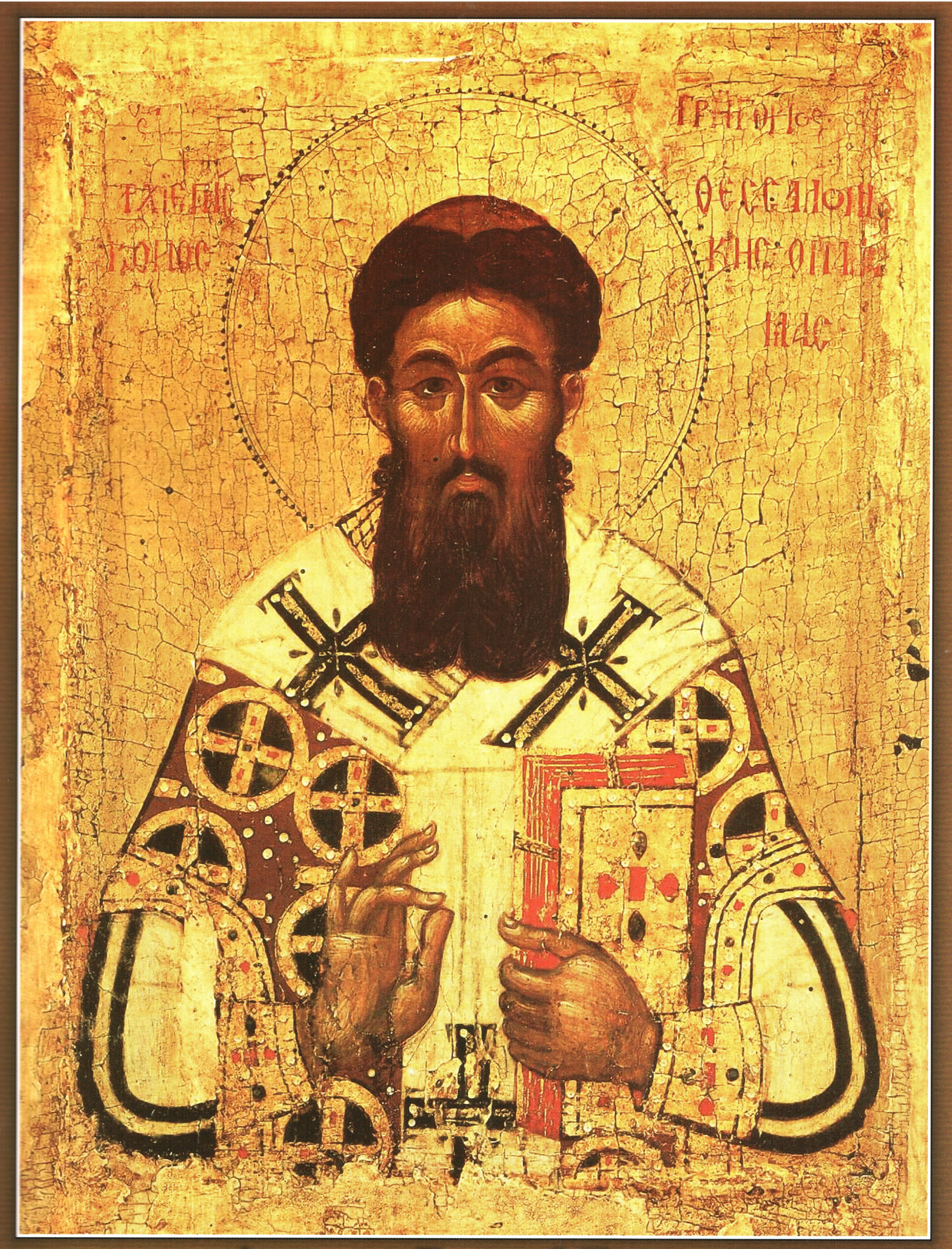
Gregory Palamas
Defender of Hesychast mysticism; distinguished God's unknowable essence from his energies.
Overview
A monk of Mount Athos and archbishop of Thessalonica, Gregory Palamas was the great theologian of Hesychasm, the Eastern Orthodox tradition of contemplative prayer aiming at experience of the 'uncreated light' of God. Against the philosopher Barlaam, who held God wholly unknowable and such experience impossible, Palamas distinguished God's transcendent essence from his 'energies' — God's real activities in which humans can truly participate. His victory shaped Orthodox theology permanently.
What they supported — and why
The essence–energies distinction
SupportedGod's essence is utterly unknowable and unparticipable, but his 'energies' — his real activity and grace — can be genuinely known and shared.
WhyThis preserves both God's total transcendence and the reality of mystical experience: we truly partake of God without comprehending his essence.
Real experience of the uncreated light
SupportedThrough hesychast prayer, purified monks can experience the same uncreated divine light seen at Christ's Transfiguration.
WhySince the energies are truly God and truly participable, union with God is a real, experiential possibility, not mere metaphor.
Theology grounded in experience over philosophy
SupportedKnowledge of God rests on purification and direct experience, not secular philosophical demonstration.
WhyGod is known by the transformed, praying person, so mystical experience takes precedence over abstract reasoning about the divine.
Causes championed
- The defense of contemplative prayer
- The real knowability of God through his energies
- Experience over speculation
Issues wrestled with
- Is God wholly unknowable?
- Can humans truly experience God?
- How do prayer and philosophy relate?
Hurdles faced
- Fierce theological controversy with Barlaam and others
- Imprisonment and excommunication before his vindication
Works & books
2 catalogued. Status shows how much survives to today.
The Triads (In Defense of the Holy Hesychasts)
SurvivesHis defense of hesychast prayer and the essence–energies distinction.
The Hagioritic Tome; homilies
SurvivesStatements of Palamite theology and pastoral teaching.
Read the texts free
Their works online — Open Library catalogues 66 works & editions.
The influence network
See Gregory Palamas in the map →Influenced by
Influenced
In their words
“God is imparticipable in his essence, yet participable in his energies.”
— The Triads (paraphrase)
Legacy
His essence–energies distinction became the backbone of Orthodox theology, securing a place for mystical experience against pure philosophy.
Further reading
Cross-checked against these authoritative references.