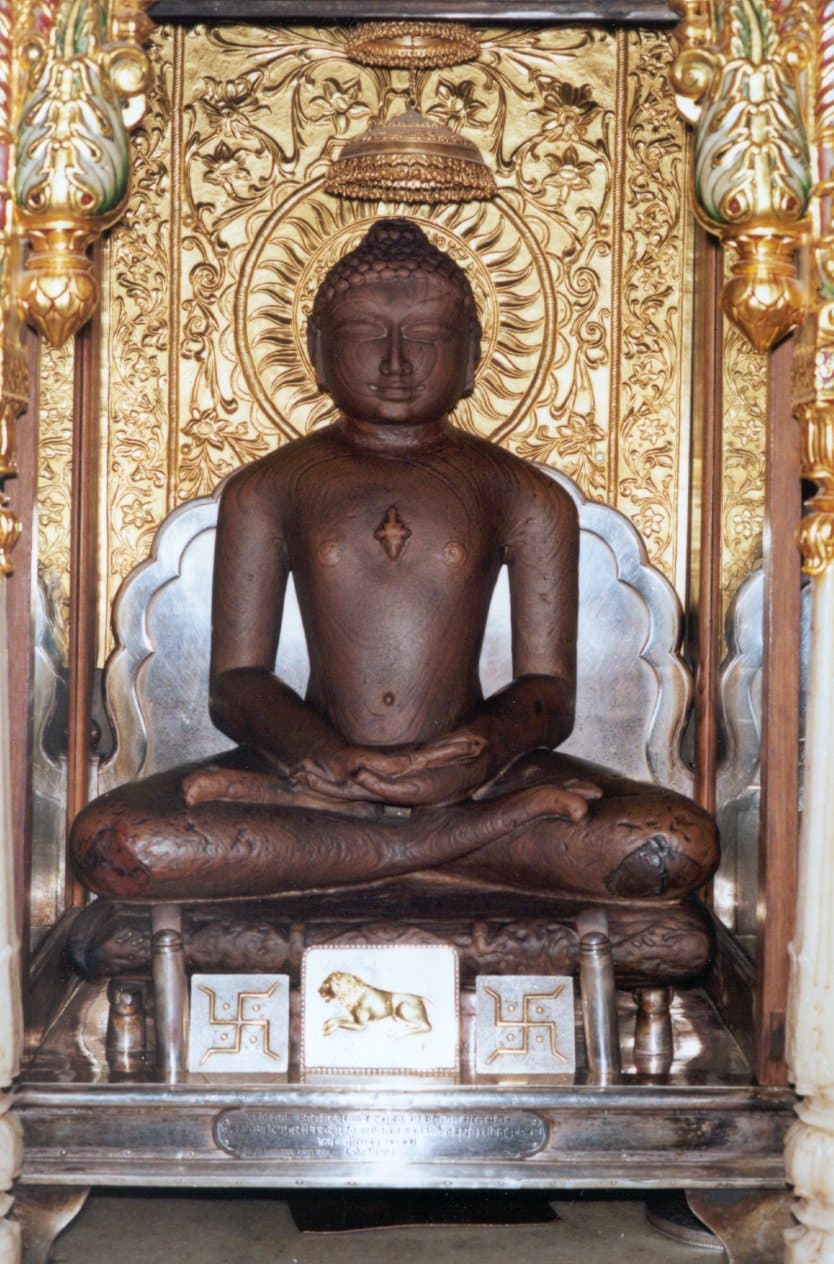
Mahāvīra
Vardhamāna Mahāvīra
24th Tīrthaṅkara of Jainism — radical nonviolence and the many-sidedness of truth.
Overview
The central figure of Jainism — its 24th and last tīrthaṅkara ('ford-maker') — and a contemporary of the Buddha. He renounced worldly life for severe asceticism, attained omniscience (kevala-jñāna), and taught the liberation of the soul (jīva) from the bondage of karma through nonviolence, self-discipline, and non-attachment. He emphasized ahiṃsā (non-harm) to all living things and the distinctive doctrines of anekāntavāda (many-sidedness) and syādvāda (conditional predication).
What they supported — and why
Ahiṃsā (radical nonviolence)
SupportedAbstain from harming any living being in thought, word, or deed.
WhyEvery living being has a soul and wishes to live; harming others binds karma to one's own soul and blocks liberation.
Anekāntavāda (many-sidedness)
SupportedReality is complex and many-sided; no single viewpoint captures the whole truth.
WhyThings have many aspects, and dogmatic one-sidedness distorts truth, so multiple perspectives must be held together.
Liberation of the soul from karma
SupportedThe soul is bound by subtle material karma and freed through ethical discipline, austerity, and non-attachment.
WhyKarma clings to the soul through passion and action; removing it restores the soul's pure, omniscient nature.
Causes championed
- Nonviolence toward all life
- Intellectual humility (many-sidedness)
- Ascetic self-purification
Issues wrestled with
- How is the soul bound and freed?
- How can one live so as to harm nothing?
- Can any single view be the whole truth?
Hurdles faced
- Extreme ascetic austerities
- Teaching amid competing śramaṇa movements
Works & books
1 catalogued. Status shows how much survives to today.
(wrote nothing)
LostHis teachings were transmitted orally and compiled by disciples into the Jain Āgamas.
The influence network
See Mahāvīra in the map →Influenced by
Influenced
In their words
“One who neglects or disregards the existence of others is destroying his own.”
— Jain teaching (Ācārāṅga Sūtra)
Legacy
He shaped Indian civilization's ethic of nonviolence and its logic of perspectival truth; Jainism remains a living tradition, and ahiṃsā influenced Gandhi and modern nonviolence.
Essays
Pieces from the Journal that take up Mahāvīra in more depth.
Further reading
Cross-checked against these authoritative references.