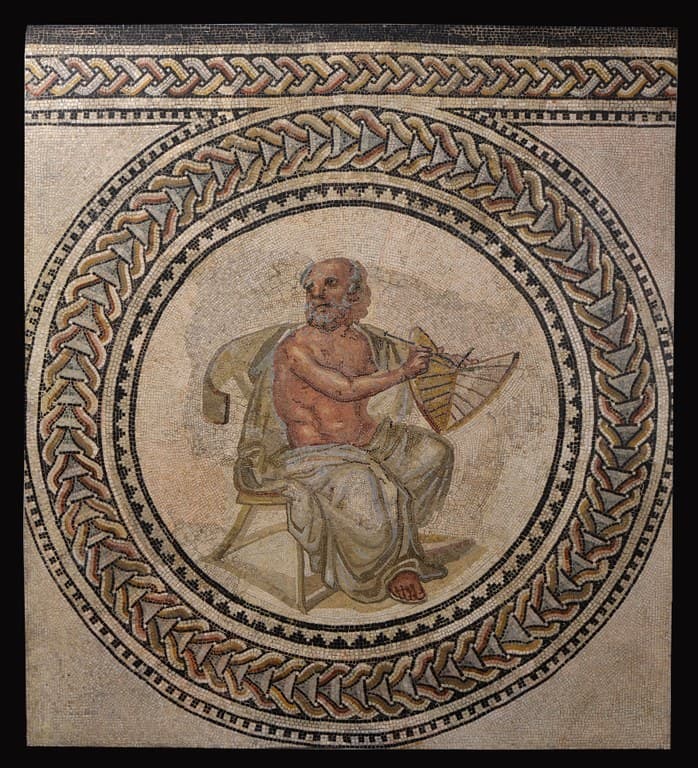
Anaximander
Proposed the boundless 'apeiron' and drew the first map of the world.
Overview
A pupil of Thales, Anaximander was arguably the first to write a prose treatise of philosophy. He rejected any ordinary substance as the origin of things and posited the apeiron — the 'boundless' or 'indefinite'. He proposed an early theory of cosmic balance, argued that living things emerged from moisture and that humans descended from fish-like ancestors, and produced the first Greek map of the known world. He introduced the idea that the earth hangs unsupported in space, held by symmetry.
What they supported — and why
The archē is the apeiron (the boundless)
SupportedThe source of all things is not water or any specific element but an eternal, unlimited, indefinite principle.
WhyIf one element were basic it would overwhelm its opposites; only something with no definite nature could give rise to and balance all opposites.
Cosmic justice
SupportedThings pay 'penalty and retribution to each other for their injustice according to the ordering of time.'
WhyOpposites (hot/cold, wet/dry) encroach on one another and are balanced back — an early law-of-nature framed as justice.
The earth is unsupported
SupportedThe earth rests at the center held by nothing, in equilibrium.
WhyHaving no reason to move in one direction rather than another, it stays put by symmetry.
Causes championed
- Naturalistic cosmology
- Explanation by balance and law rather than divine will
Issues wrestled with
- What underlies and unifies opposites?
- Why does the earth not fall?
- How did life and humans originate?
Hurdles faced
- No vocabulary yet existed for abstract principles — he had to coin the concept of the indefinite
Works & books
1 catalogued. Status shows how much survives to today.
On Nature
Fragments onlyThe first known Greek prose treatise on the cosmos; survives only in a famous fragment and later reports.
Read the texts free
Their works online — Open Library catalogues 4 works & editions.
The influence network
See Anaximander in the map →Influenced by
Influenced
In their words
“The boundless is the origin of existing things... they pay penalty and retribution to each other for their injustice according to the ordering of time.”
— the surviving fragment via Simplicius
Legacy
He introduced abstraction into science — an unobservable, boundless principle — and anticipated ideas of natural law, cosmic evolution, and a universe without a supporting foundation.
Follow their questions
This thinker is a stop on these paths through philosophy.
Further reading
Cross-checked against these authoritative references.